Client
The Southern California Food Allergy Institute (SCFAI) is an organization dedicated to helping all children who suffer from food allergies, with the goal of aiding them to safely eat whatever they want, whenever they want.
Challenge
SCFAI needed to design and develop a patient support mobile application to continue serving patients during the pandemic. The application needed to be integrated with an existing database to provide two-way communication on any given individual's treatment progress through their food allergy treatment program.
Our designers and developers needed to go through existing documentation that included user experience guidelines and the SCFAI website. We worked with the COO and lead developer to approve the design and devise a set of integration guidelines.
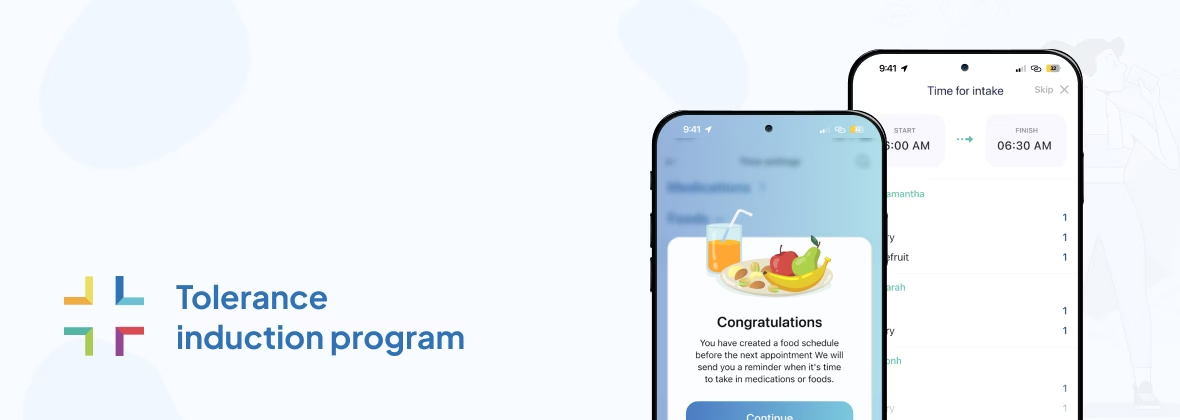
They needed an app that sent reminders to patients about their daily food and medication intake, tracks their symptoms, and provides emergency advice in case of an allergic reaction. Every patient has an individual 'Tolerance Induction Plan' recorded and processed on the app’s backend infrastructure. Their individual plan is regularly updated. Patients needed to be able to see plan changes, their upcoming appointments, and payment schedules.
Solution
For the design phase, we tried a few options for the visuals and the user flow. We discovered that we had to change a few things. We had two meetings per week that included SCFAI staff and our design team. We collaborated via Figma and Slack to hash out all the details. We finished and approved the clickable prototype within 4 weeks, which was faster than both sides expected. As soon as the UI/UX was done, we had a few setup meetings between our CTO and their lead developer to figure out the details regarding the technical integration between the front end and the backend and get the first version of the API reference, which was rolled out in stages.
As the app needed to work on both the iOS and Android platforms, we chose React Native and Expo as the mobile development stack. The development was split into several milestones that included several builds each. We kept the development process very transparent and DevTeam.Space’s lead developer was always ready to collaborate and help with the technical side of things, including making future development decisions with their CTO.
Results
The Tolerance Induction program app was released for unlisted app distribution on the iOS platform and as a private app for Google Play. Since then, it has been installed on more than 2,000 client devices. The app code was transferred to SCFAI, and their developers are undertaking the in-house support, maintenance, and regular app updates.