10 Job Search Apps like Indeed I Shortlisted for 2026 (and How to Build One)

profile
By Alex
Here's a question that keeps a lot of founders up at night: how do you break into a $200 billion market where Indeed already owns the default job search behavior of millions of job seekers?
The answer isn't just to build "Indeed, but better." Instead, you find the gaps - the niches where general job search platforms fail, the job seekers chasing their dream job that general platforms ignore, and the features incumbents will never justify building.
In this guide, I'll break down the 10 best job search apps like Indeed - apps that actually make money. I'm not just talking about what they do - I'll be examining how they differentiate, why employers pay them instead of posting free on Indeed, and what technical decisions make their business models work.
If you're a founder sizing up this market, or a technical lead planning a build, this is your blueprint for what works - and what doesn't.
In this article:
- What are job search apps?
- What are the 10 best job search apps?
- How to build a job search website
- Build Your Own Job Search App Easily
- FAQs About job search apps
What are Job Search Apps?

Think of job search platforms as matchmakers, but instead of romantic partners, they're built to connect job seekers with opportunities through job postings. The catch? Not all matchmakers work the same way.
Job search apps can be classified into three types based on how they source listings and add job postings:
- Job boards: Employers pay to post their job openings directly - Monster and CareerBuilder built empires on this model. You control the job description, the requirements, everything. The downside? You need a sales team convincing companies to pay for something they can post for free elsewhere.
- Job aggregators: They scrape job listings from company websites and other boards automatically. SimplyHired does this, so their inventory grows fast without begging employers to post. However, there's a catch: they are pulling jobs from sources they don't control. There's always the possibility of a position already being filled or removed, and the source hasn't been updated.
- Hybrid job sites: Job search websites that combine direct posting with aggregation. Indeed figured this out early - offer free employer posting to build volume, then scrape other job boards to fill the gaps. The tradeoff is managing two completely different systems: one handles direct posts with clean data, the other processes scraped content.
Research by HIGH5 shows that 55% of job seekers use professional networking sites during their search. Job search apps complement, rather than replace, networking-based approaches.
Must-have Features to Provide Job Seekers
Job boards must have the following essential features:
- Job listings: These are the inventory, allowing job seekers to find work that fits their skills.
- Job seeker profiles: These capture resumes, skills, and preferences. The depth of these profiles determines two things: how well the job app can match candidates to jobs, and whether you can charge potential employers to post jobs and search your candidate database.
- Employer dashboards: These give employers oversight of the recruitment process. Employers should be able to scan applicants or see which jobs are performing; they won't renew their subscriptions.
- Search and matching systems: These connect the two sides, whether through keyword search, faceted filtering (location + salary + remote options), semantic search (understanding "data scientist" relates to "machine learning engineer"), and recommendation algorithms.
What are the 10 Best Job Search Apps?

| Platform | Platform Type | Primary Niche | Monetization Model | Key Differentiator |
|---|---|---|---|---|
| Indeed | Hybrid (Aggregator + Direct) | General (All Industries) | Freemium + Pay-per-click | Largest database (250M+ monthly visitors) |
| Professional Network + Job Board | Professional/White-collar | Freemium + Subscriptions | Network effects and passive candidate access | |
| ZipRecruiter | Distribution Platform | General (High-volume hiring) | Subscriptions | One post reaches 100+ job boards |
| Glassdoor | Review Platform + Job Board | Research-focused seekers | Freemium + Employer branding | Company transparency and salary data |
| Dice | Niche Job Board | Tech professionals only | Pay-per-post + Database access | Skill-based indexing for technical roles |
| FlexJobs | Curated Job Board | Remote/flexible work | Candidate subscriptions | Manual screening eliminates scams |
| AngelList | Niche Job Board | Startup jobs (all stages) | Freemium + Subscriptions | Equity transparency and funding data |
| Wellfound | Niche Job Board | Early-stage startups (Seed/Series A) | Tiered subscriptions | Highest equity potential, earliest stage |
| SimplyHired | Aggregator | Local/geographic focus | Sponsored posts + CPC | Commute calculator and local salary data |
| Snagajob | Niche Job Board | Hourly/shift-based work | Pay-per-post + Bulk packages | Shift scheduling and fast hiring for hourly roles |
1. Indeed – Broad Market Leader
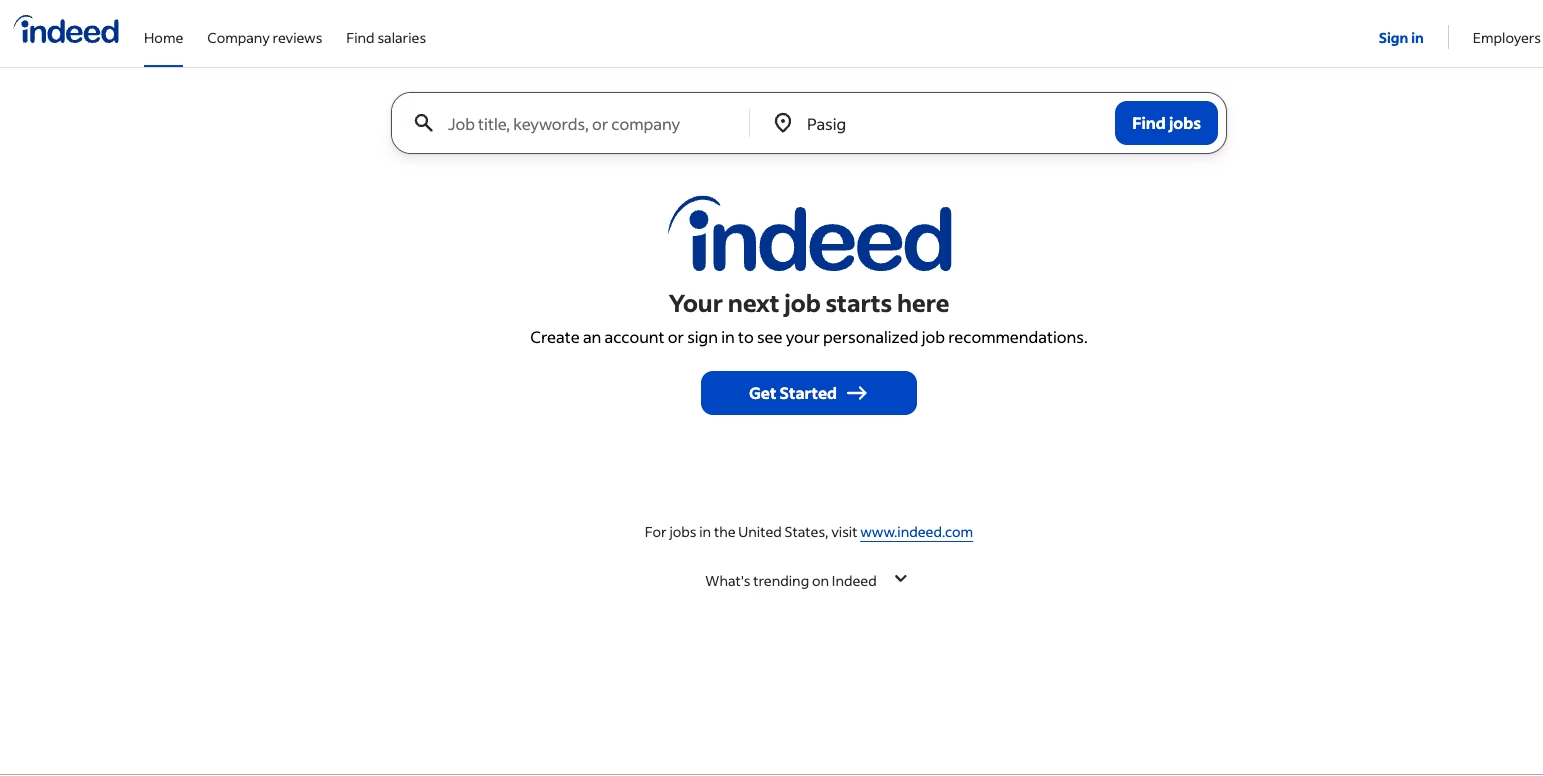
Indeed operates as a hybrid job search engine and platform combining aggregation with direct job postings from employers, serving over 250 million monthly visitors globally. For job search platform builders, Indeed represents the "scale wins" approach - massive inventory creates network effects where job seekers come for choice, employers come for job seeker volume.
Key Platform Features
- Smart job alerts: Use behavioral data (clicks, applications, searches) to refine matching over time, allowing job seekers to stay engaged even when actively employed
- Company pages integration: Pulls Glassdoor data (Indeed's parent company) directly into job listings, surfacing employee reviews and salary ranges without job seekers leaving the platform
- Sponsored job posts: Employers bid for visibility in search results, creating a performance-based ad system similar to Google AdWords
- Resume hosting and parsing: Automatically extracts skills and experience from uploaded resumes, enabling one-click applications across multiple jobs
Technical Considerations
Building an Indeed-like job search website requires a robust scraping infrastructure to aggregate millions of listings. I discovered the following focus points:
- Sources handling: Distributed scrapers handling thousands of sources, each with different HTML structures. Budget for continuous scraper maintenance - websites change structure constantly.
- Deduplication becomes critical at scale: The same job appears across multiple job boards with slight variations in title, location formatting, or description. You need a way to detect and avoid these duplicates.
- Search engine and filtering must handle scale: Indeed processes millions of daily searches. You'll need a full-text search engine, Redis for caching frequently accessed results, and PostgreSQL for relational data.
2. LinkedIn - Professional Network Integration

LinkedIn combines professional networking with job search functionality across various industries, serving 310 million monthly active users. LinkedIn's job search platform power comes from integrating job search into existing professional behavior - maintaining profiles, building connections, sharing content - rather than treating job search and job postings as separate activities.
Key Platform Features
- Profile-based applications: These convert existing LinkedIn profiles into application materials automatically, eliminating resume uploads and reducing application friction
- Network-based job discovery: These surfaces jobs where job seekers have existing connections at the company, increasing application-to-interview conversion through warm introductions
- Recruiter InMail: This enables direct outreach from employers to passive job seekers not actively searching, creating a recruitment channel beyond traditional applications
- Skills endorsements and recommendations: These provide social proof that employers can filter on, creating trust signals beyond self-reported qualifications
Technical Considerations
Building a LinkedIn-like job board requires integrating social graph data with job matching to surface relevant candidates for recruiters. I discovered the following considerations:
- Building a social graph: The social graph - the mechanism that connects job seekers with job opportunities - must inform job recommendations ("You have 3 connections at Company X"). This requires graph database capabilities (Neo4j) or complex SQL queries joining user connections with company employees.
- Profile parsing and skill extraction: These become more sophisticated than resume parsing. You need to extract structured data from free-text sections (job descriptions, accomplishments), identify skills that aren't explicitly listed, and infer seniority levels from titles and experience duration.
- Multi-dimensional job search: The recruiter interface requires faceted search across multiple dimensions - skills, location, experience level, current company, education - with Boolean logic support.
- Query performance matters: Recruiters expect sub-second search results even when filtering across millions of profiles.
3. ZipRecruiter – Distribution Platform
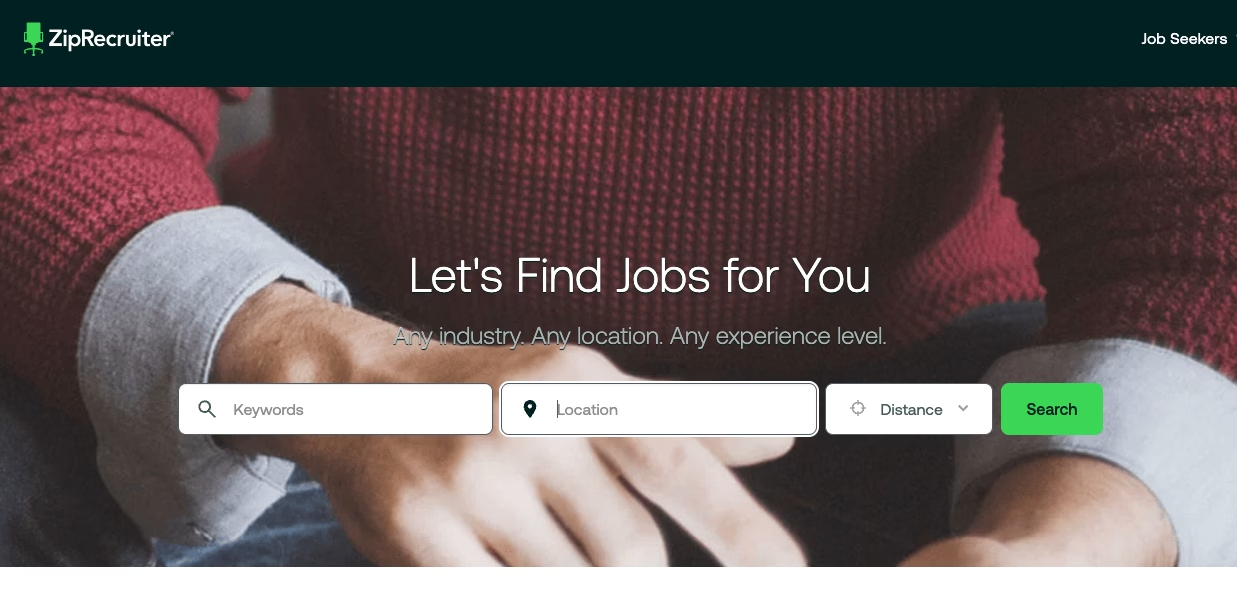
ZipRecruiter operates as a job distribution platform that simplifies the recruitment process, syndicating a single employer post across 100+ job boards automatically. The value proposition focuses on employer convenience - post once, distribute everywhere - rather than building a proprietary candidate database.
Key Platform Features
- Multi-board syndication: This distributes jobs to 100+ partner job boards through API integrations, maximizing employer reach without manual job posting to each job board
- AI-powered candidate matching: This analyzes resume content and job descriptions, allowing job seekers to get auto-matched or sent messages inviting them to apply to relevant job ads. These create employer-to-candidate outreach beyond the traditional application flow
- Real-time notifications: These alert candidates when employers view their profiles, creating engagement hooks that bring users back to the job search platform
- Applicant tracking across sources: This consolidates applications from all distribution channels into a single dashboard, preventing employers from managing multiple inboxes
Technical Considerations
Building a job search distribution platform requires maintaining stable API integrations with 100+ job boards, each with different data formats, authentication methods, and rate limits. Budget for a full-time integration team - job boards change APIs frequently, breaking integrations. Consider the following:
- Deduplication across distributed posts becomes critical: When the same job appears on your job search website and via syndication to partner job boards, candidates might apply twice. You need to track job IDs across all distribution channels and match applications back to source jobs.
- Real-time analysis: The AI matching system requires real-time resume parsing and job description analysis. When employers post jobs, you immediately parse job descriptions, extracting required skills, experience levels, and location. Then you query your candidate database for matches and trigger invitation emails. This pipeline must complete in minutes, not hours.
- Error handling: You must handle webhook failures, retries, and out-of-order delivery without losing applications.
4. Glassdoor - Transparency-First Platform
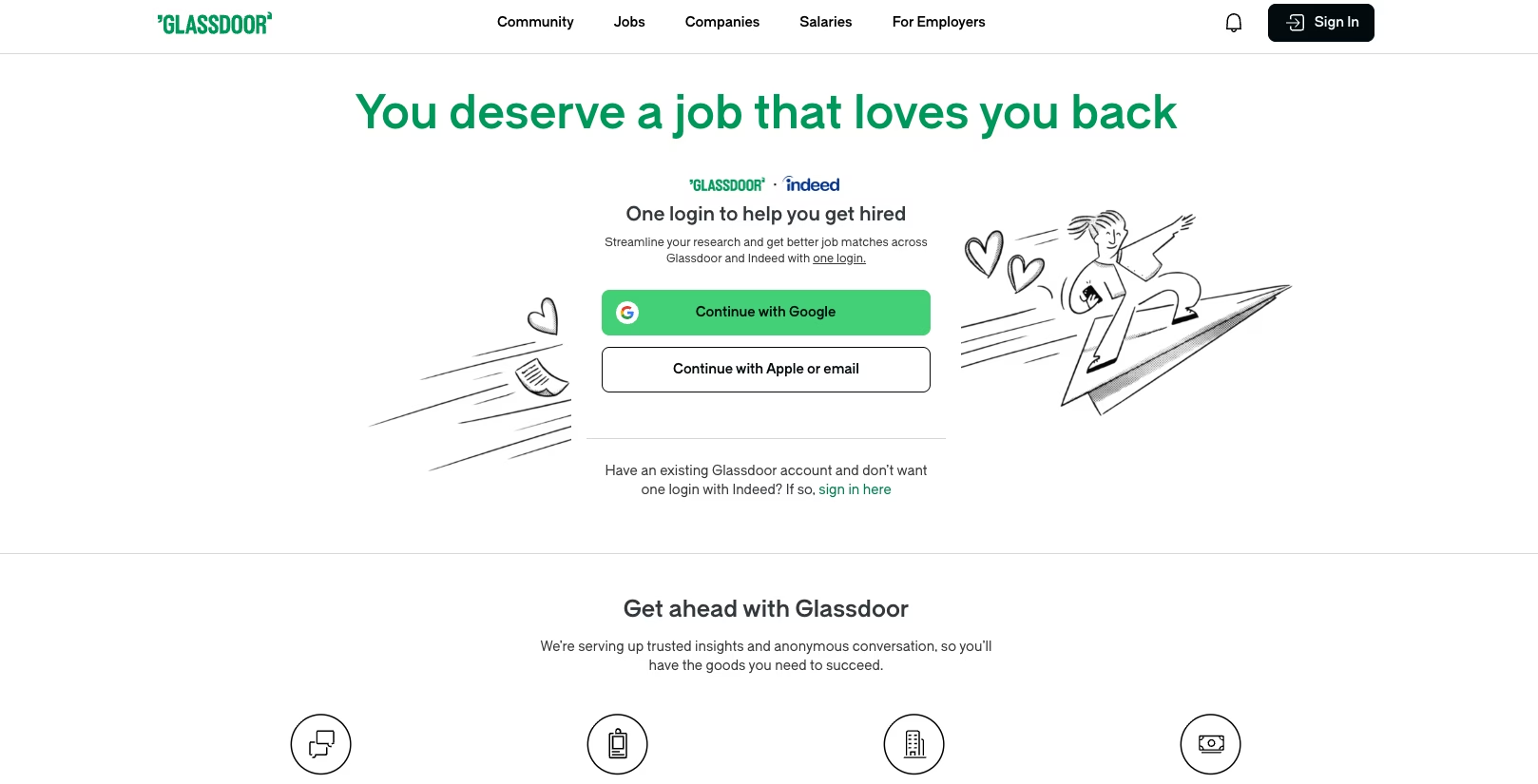
Glassdoor built a job search website on top of a company review database, creating a research-first experience. The core insight: candidates want to evaluate companies before applying to job opportunities, not just find open positions from job postings.
Key Platform Features
- Employee review aggregation: This collects anonymous company reviews from current and former employees, providing culture insights beyond marketing materials
- Salary data transparency: This crowdsources compensation information by role and location, giving candidates negotiation leverage and realistic expectations
- Interview question database: This captures actual questions asked by companies, helping candidates prepare and reducing interview anxiety
- Company culture scores: These aggregate review data into quantified metrics (work-life balance, management quality, career growth), enabling apples-to-apples comparison
Technical Considerations
Building a review-based job search platform requires sophisticated content moderation systems. From my analysis, you need to detect fake reviews (competitors posting negatives, companies posting positives), spam, and policy violations. Here are other considerations:
- Human review: Machine learning models can flag suspicious patterns (multiple reviews from the same IP, similar language across reviews), but human moderators make final decisions.
- Salary data normalization presents challenges: Users report compensation in different formats - hourly vs. annual, base vs. total, with or without bonuses. You need to normalize all inputs into comparable formats, adjusting for inflation, cost-of-living by location, and experience level.
- Study the give-to-get model: The "give-to-get" model requires tracking user contributions. When users write reviews or submit salary data, you credit their account, unlocking premium features. This needs fraud prevention - detecting copy-pasted reviews, gibberish submissions, or users gaming the system.
- Avoid deduplications: Company matching and deduplication matter when users review companies. "Google," "Google Inc," "Google LLC," and "Alphabet" should map to the same entity. You need company entity resolution, matching user-entered company names to canonical company records.
5. Dice - Tech-Specialization Platform
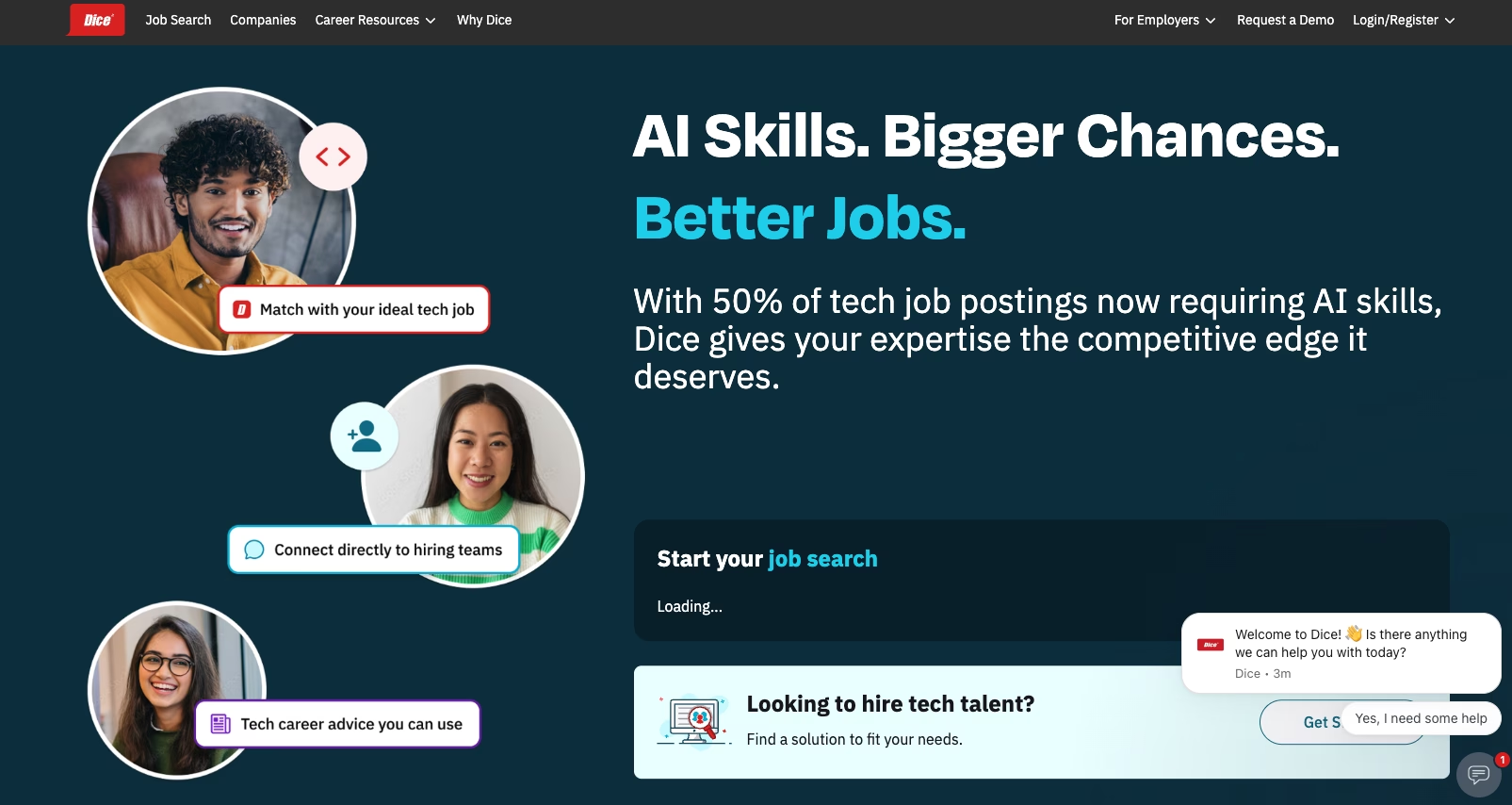
Dice built a tech-only job board with skill-based indexing for developers, engineers, and IT professionals seeking job opportunities in tech. The niche focus enables specialized features that general job boards can't justify building.
Key Platform Features
- Skill taxonomy and filtering: This indexes jobs by specific programming languages (Python, Java), frameworks (React, Django), and tools (AWS, Docker), enabling precise matching beyond job titles
- Tech salary benchmarking: This provides compensation data broken down by specific technical skills, location, and experience level - far more granular than general salary data
- Certification and education filters: These surface jobs requiring or preferring specific credentials (AWS Certified, CS degree), helping candidates self-select appropriate opportunities
- Tech-focused career content: This provides industry news, skill trend analysis, and career development guidance specifically for technical professionals
Technical Considerations
Building a tech-focused job search platform requires maintaining a comprehensive skill taxonomy before anything else. I discovered these other considerations:
- Taxonomy architecture: You need to track hundreds of programming languages, thousands of frameworks and libraries, and their relationships (React.js is related to JavaScript, Django to Python). This taxonomy must be updated as new technologies emerge.
- Natural language processing: Skill extraction from job descriptions and resumes uses natural language processing. You're identifying technical terms ("We use Python and Django") and normalizing them ("python" = "Python" = "python3"). This requires technical dictionaries and context understanding—"Java" the language vs. "Java" the coffee.
- Multidimensional analysis: Tech salary data must segment by multiple dimensions simultaneously: skill, location, experience level, company size, and industry. A "Python developer" makes different salaries in finance vs. startups, in SF vs. Austin, with 2 years vs 10 years of experience. Your data model needs to support multidimensional analysis.
6. FlexJobs - Curation-Based Platform
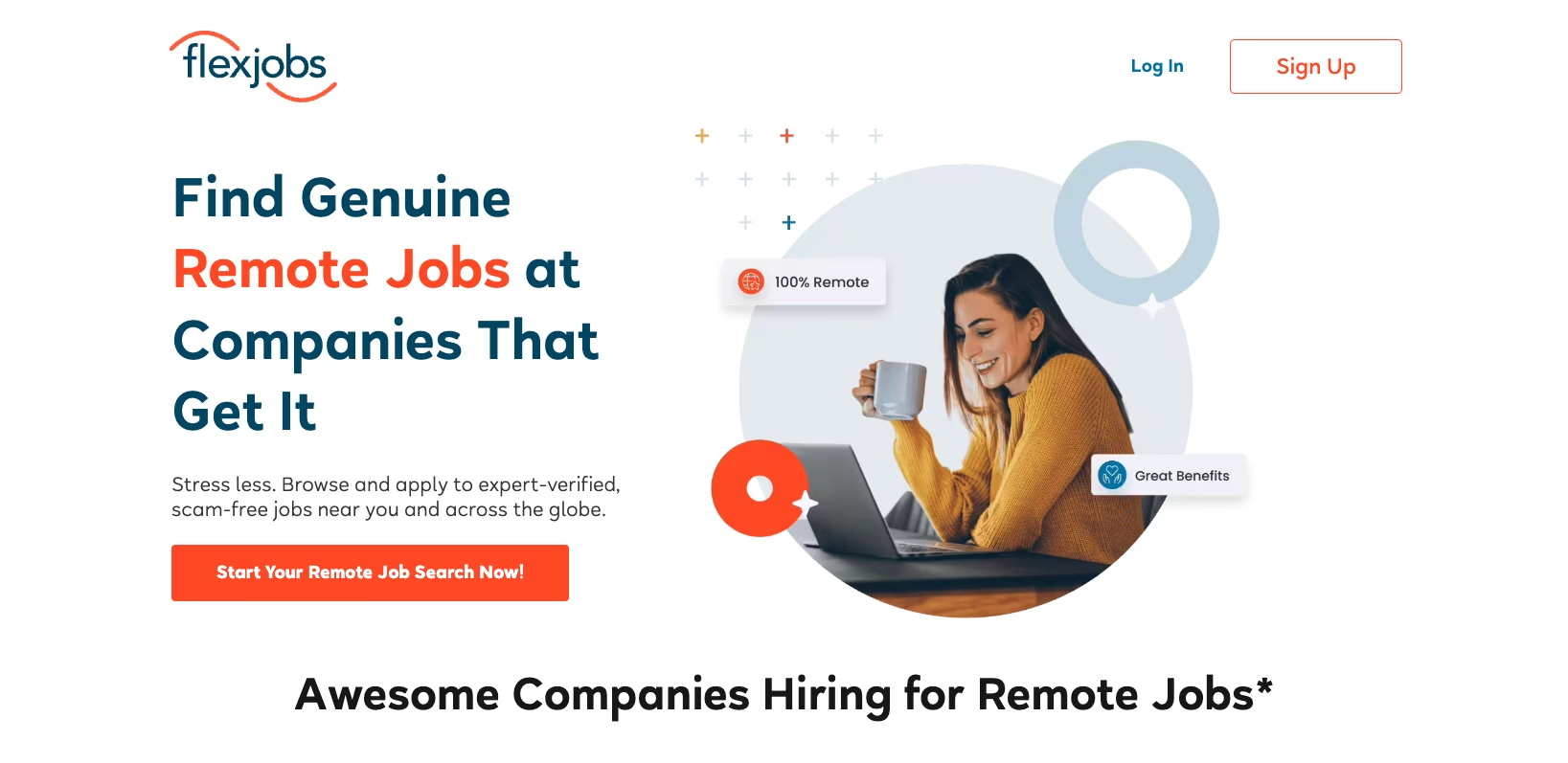
FlexJobs manually screens every job posting to eliminate scams, focusing exclusively on remote work and flexible work arrangements. The curation model trades scale for quality, charging candidates for access rather than employers for listings.
Key Platform Features
- Manual job screening: This reviews every submitted job for legitimacy, eliminating work-from-home scams, pyramid schemes, and fraudulent postings
- Flexible work categorization: This aggregates jobs by arrangement type (fully remote, hybrid, flexible hours, freelance, part-time), enabling precise filtering
- Skills testing integration: This offers assessments that candidates can complete and attach to profiles, providing verified skill proof beyond resumes
- Career coaching services: This provides one-on-one resume reviews and a job search strategy for premium subscribers
Technical Considerations
Building a curation-based job search website requires workflow tools for manual review. Your moderation queue shows pending job postings. Moderators review each posting, checking company legitimacy, role description, and compliance with flexible work criteria. You need clear review guidelines and moderator training:
- Focus on candidate experience: The business model creates different technical priorities than employer-funded job search websites. Since potential employees pay, you optimize for candidate experience - better search, smarter alerts, algorithmic matching jobs - rather than employer features like applicant tracking.
- Security flagging: Scam detection benefits from machine learning even with manual review. ML models can flag suspicious patterns (overseas phone numbers, vague job descriptions, requests for personal information) for extra moderator scrutiny, improving review efficiency.
- Payment system architecture: The subscription model needs robust payment processing and subscriber management. You're handling recurring billing, failed payment retries, subscription upgrades/downgrades, and pro-rated refunds. Stripe or similar payment platforms handle most complexity, but you need tight integration.
7. AngelList - Startup Ecosystem Platform
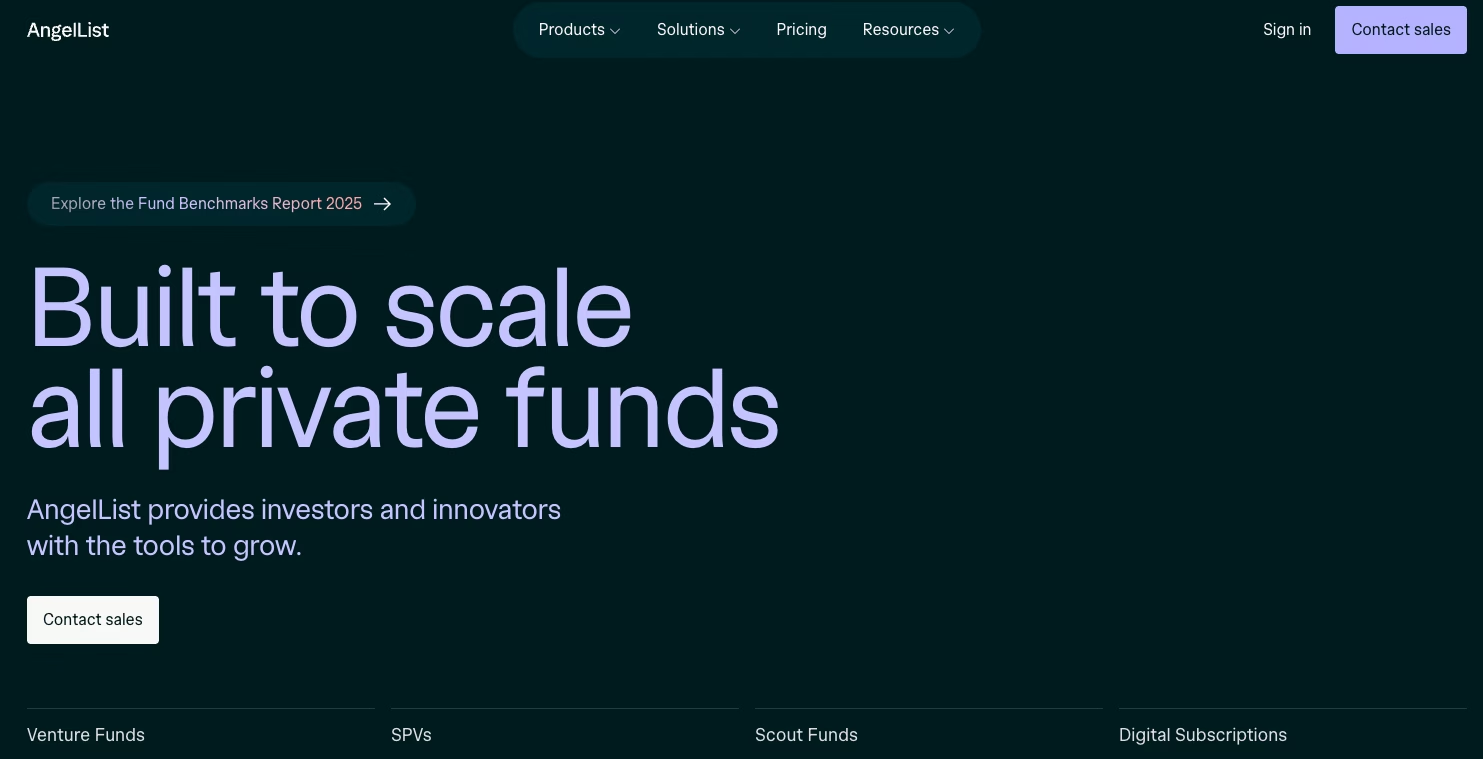
AngelList built a startup job search platform with equity compensation transparency and direct founder access. The job board differentiates by serving the specific needs of startup hiring - equity details, funding stage, and company mission - that general job boards ignore.
Key Platform Features
- Funding stage and investor transparency: This displays the company's funding round (seed, Series A, etc.) and investor names, helping candidates assess startup viability and growth potential
- Equity compensation calculator: This shows stock option details, including strike price, vesting schedule, and potential value, addressing startup compensation complexity
- Direct founder messaging: This enables candidates to message potential employers and company founders directly, bypassing recruiter gatekeepers and speeding hiring timelines
- Company mission and culture emphasis: This highlights startup mission statements and values prominently, helping candidates self-select for culture fit
Technical Considerations
Building a startup job search website requires integrating external data sources. Upon checking, I saw these important considerations:
- Access to relevant data: Funding information comes from APIs like Crunchbase or PitchBook. So you need to match your company records to their databases, maintaining data freshness as funding rounds occur.
- Financial modeling: Equity calculators need sophisticated financial modeling. You're calculating stock option value considering strike price, company valuation, liquidation preferences, dilution from future rounds, and exit scenarios. This requires finance domain expertise beyond typical job board development.
- Moderation challenges: The founder messaging system creates moderation challenges. Unlike traditional application workflows, where employers control who they engage with, open messaging enables spam. You need rate limiting, spam detection, and quality controls preventing candidates from mass-messaging every founder.
8. Wellfound - Early-Stage Focus
Wellfound (the rebrand specifically targeting seed/Series A companies) narrows its focus even further than AngelList, concentrating on the earliest-stage startups. The differentiation: higher risk, higher equity potential, more autonomy, less structure.
Key Platform Features
- Stage-based company filtering: This enables candidates to specifically target seed or Series A companies, separating earliest-stage from later-stage startups
- Startup preference matching: This captures candidate preferences around company stage, industry, team size, and role autonomy, improving match quality
- Mission and values prominence: This emphasizes startup culture and purpose beyond compensation, appealing to mission-driven job seekers
- Equity upside calculators: Create calculators to model early-stage equity scenarios with higher risk and potential returns than later-stage options
Technical Considerations
Building an early-stage job board requires even more sophisticated startup viability scoring beyond mere job postings. From my research, here are the technical considerations you need to check:
- Check scoring metrics: Seed and Series A companies have less data - no revenue metrics, small teams, often pre-product. Your scoring models need to rely on founder backgrounds, investor quality, and market opportunity rather than traditional company metrics.
- Proper equity modeling: The equity modeling becomes more complex for early-stage work. You're calculating ownership percentages, expecting multiple future funding rounds with significant dilution. Scenarios need to model 3-5 future funding rounds and various exit valuations to give job seekers realistic expectations.
- Candidate matching: Candidate preference matching needs to weight factors differently than general platforms. Autonomy, learning opportunities, and mission matter more than salary and benefits for early-stage job seekers. Your matching algorithm should prioritize these softer factors over traditional compensation matching.
9. SimplyHired - Local Job Focus
SimplyHired operates as a job search engine and aggregator, emphasizing geographic proximity and commute optimization. While general search engines support location filtering, SimplyHired makes local job search the core value proposition.
Key Platform Features
- Commute time calculator: This estimates actual travel time from candidate location to job site using real traffic data, enabling search by max commute rather than radius
- Local salary data by city: This provides location-specific compensation information, addressing cost-of-living differences across geographies
- Geographic radius filtering: This enables precise distance-based search ("jobs within 10 miles") with map visualization showing job locations
- Company culture scoring: This aggregates review data similar to Glassdoor but focused on location-specific culture (remote policy, office amenities, commute support)
Technical Considerations
Building a local job board requires geolocation infrastructure throughout the stack. Job postings need geocoded addresses, candidate profiles need home locations, and the search must calculate distances between them. Use services like the Google Geocoding API for address-to-coordinates conversion. Other considerations include:
- Unique calculators for users: The commute calculator needs real-time traffic data and route calculation. Google Maps Distance Matrix API provides travel time estimates considering current traffic. You need to cache results - recalculating travel time for every search is too slow and expensive.
- Improving visualization with recruitment maps: Map-based search visualization requires GIS (Geographic Information Systems) capabilities. Displaying jobs on interactive maps, drawing radius circles, and enabling map-based filtering require libraries like Leaflet or Google Maps JavaScript API integrated into your frontend.
10. Snagajob - Hourly Work Platform
Snagajob focuses exclusively on hourly and shift-based job openings in retail, hospitality, restaurants, and service industries. The job search website optimizes for the specific needs of hourly hiring: fast time-to-hire, shift scheduling visibility, and mobile-first applications.
Key Platform Features
- Shift scheduling integration: This displays exact shift times and days in job listings, letting job seekers see schedules before applying
- Fast hiring workflows: These enable 24- 48-hour interview scheduling, matching employer urgency in high-turnover industries
- Mobile-first application flow: This optimizes the entire application process for smartphones, recognizing that hourly workers primarily use mobile devices
- Entry-level focused filtering removes experience requirements and degree filters, surfacing opportunities for job seekers without formal qualifications
Technical Considerations
Building an hourly job board requires shift scheduling data structures. From my research, your database schema needs to model complex scheduling patterns and support filtering by day of week, time of day, and schedule consistency. Here are other considerations:
- Mobile optimization becomes critical: Hourly job seekers apply from smartphones while on breaks or between shifts. Your application flow must work perfectly on small screens with slow connections. Test on actual budget Android devices, not just iPhones.
- SMS integration: This creates a direct communication channel. Hourly job seekers often don't check their email regularly. Text messaging for interview scheduling, shift updates, and job alerts dramatically improves engagement. You need Twilio or similar SMS APIs plus compliance with TCPA regulations around messaging.
- Automated interview pipeline: Fast hiring workflows require automated interview scheduling. When job seekers apply, employers should be able to instantly offer interview slots. Integration with calendar systems (Google Calendar, Outlook) lets employers manage availability while job seekers self-select interview times.
How to Build a Job Search Website

Learning how to build a job board website means creating a two-sided marketplace where employers and candidates both find value. If I'm going to build a job board, here's how I suggest you break down that chicken-and-egg problem and build something that actually works:
1. Planning and Requirements
I should define exactly what I'm building, who it's for, and how it makes money. When I look at this stage, I remind myself that while this isn't the fun part, skipping it means rebuilding everything six months in.
Define the niche and validate demand
I must pick a specific niche using one of these angles: industry (tech, healthcare, construction), geography (Austin tech jobs, Florida healthcare, Middle East finance), job type (remote work, hourly, executive), or candidate demographic (military veterans, recent graduates).
Before writing code, I should validate the demand. Find 100+ current job openings in the niche. Locate where job seekers congregate - LinkedIn groups, Reddit communities, Discord servers. The important train of thought for me is: if I can't find either, then I don't have a market.
Choose the differentiation strategy
You shouldn't build every feature that Indeed has. Build what makes you different.
Remote job focus like FlexJobs? Manual curation becomes the core feature. Tech jobs like Dice? Skill-based filtering matters most. Hourly work like Snagajob? Shift scheduling visibility is essential.
Pick the business model early
If I'm building a job app, then my monetization strategy shapes everything - product priorities, sales strategy, and user experience.
| Business Model | When It Works | Platform Priority |
|---|---|---|
| Pay-per-post | Employers hire occasionally | Job quality over quantity |
| Subscription | High-volume hiring needs | Employer retention and features |
| Freemium | Need growth plus monetization | Candidate volume first, then monetize |
| Resume database | Employers want proactive outreach | Candidate profile completeness |
Document technical requirements
Create a requirements document covering:
- Job board type: Job board, aggregator, or hybrid
- Core features: What differentiates my product (don't list everything)
- Integrations needed: Payment processing, email, SMS, job scraping, and third-party services
- Expected scale: How many concurrent users, how large a job database
- Mobile strategy: Responsive web or native apps
2. Build The Development Team
I should also assemble my job search app development team. For an MVP, I recommend about 8-10 people covering design, development, testing, and project management.
Core development team composition
| Test cases, bug identification, and requirements validation | Responsibilities | Required Skills |
|---|---|---|
| Project Manager | Timeline, budget, stakeholder communication, scope management | Scrum/Agile methodology, handles sprints if using Scrum |
| Business Analyst | Requirements definition, user stories, feature validation | Recruitment industry experience helps dramatically |
| UI/UX Designer | Wireframes, prototypes, final designs | Figma/Sketch, Material Design (Android), Human Interface Guidelines (iOS) |
| Frontend Developers (2-3) | User interface, responsive design, API integration | React or Vue.js, JavaScript, mobile optimization |
| Backend Developers (2-3) | Job board logic, database design, APIs, job scraping | Node.js or Python (Django/Flask) |
| QA Engineer | Test cases, bug identification, requirements validation | Jest or Pytest, manual and automated testing |
| DevOps Engineer | Infrastructure, deployment, monitoring, security | Test cases, bug identification, and requirements validation |
Choose the development process
I discovered that Scrum works well for job search websites: the team will break the project into 2-week sprints, each delivering a deployable feature. Every sprint includes planning, daily standups, development, testing, review, and retrospective.
This approach will let me launch a job app MVP fast, then add features based on actual user feedback instead of guesses.
3. Set Up Development Infrastructure
I need to choose where my job board lives and what tools my team uses. My professional POV: Cloud infrastructure wins for startups - lower upfront costs, easier scaling, and I won't be managing physical servers.
Infrastructure decisions
| Automated backups, replication, and scaling included | Recommended Solution | Why It Matters |
|---|---|---|
| Platform-as-a-Service | AWS Elastic Beanstalk or Google App Engine | You deploy code; they handle servers, load balancers, auto-scaling |
| Database | AWS RDS (PostgreSQL) or Google Cloud SQL | Automated backups, replication, scaling included |
| CDN | CloudFront (AWS) or Cloud CDN (Google) | Serves images/CSS/JavaScript globally with low latency—critical for mobile |
| Source Control | GitHub | Code management and team collaboration |
| Containerization | Docker | Consistent environments from development through production |
| CI/CD Pipeline | GitHub Actions or AWS CodePipeline | Automated testing and deployment |
Budget expectations: $500-1,000/month during development, scaling to $2,000-5,000/month as you gain users.
4. Design and Development
This is where my job search platform takes shape - the development process moves from wireframes to working code. From my experience, most teams spend 3-4 months here on an MVP, and 6-12 months on a full-featured job board.
Platform Design
The UI/UX designer creates wireframes: simple layouts showing where components go without visual details. Then, high-fidelity prototypes add branding, colors, and interaction flows.
Design for mobile first: Even if I'm not building for the web, start with mobile layouts and expand to desktop. This ensures core workflows work on small screens, where 86% of job seekers actually search.
Key screens I'll be needing:
- Job search results and filtering interface
- Job detail page with apply button
- Application submission flow for every job applicant (keep this simple - 60% abandon complex forms)
- Candidate profile creation and editing
- Employer dashboard for job posting
- Admin panel for content moderation
Use Figma for design collaboration. Developers can extract CSS values and assets directly, reducing back-and-forth iterations.
Frontend Development
At this point, my frontend developers build the job app interface using React or Vue.js. These frameworks enable component-based development - I'll be building UI components (job cards, search filters, application forms) once and reuse everywhere.
I noticed React works particularly well because the virtual DOM optimizes rendering for large job lists, the ecosystem provides pre-built components (infinite scroll, dropdowns, date pickers), and server-side rendering improves SEO.
The frontend communicates with my backend via REST APIs. When users search for jobs, the frontend sends API requests, receives JSON responses, and renders results.
Backend Development
Backend developers ensure my frontend interface performs the tasks each button, form, or process represents. They build core job board logic using Node.js or Python.
From experience, Node.js makes sense for job search websites because I'll be using JavaScript end-to-end (simplifying team coordination), the event-driven architecture handles concurrent users efficiently, and the package ecosystem (Express, Passport, Bull for job queues) covers most needs.
My backend handles authentication, job CRUD operations (create, read, update, delete), search and filtering logic, application processing, email notifications, and payment integration.
Database Development
When my backend executes processes happening on my frontend, the information (user data, forms submitted, etc.) has to be stored somewhere. This is where your database comes in.
Use PostgreSQL for my database. Job search websites need complex queries joining multiple tables - users, jobs, applications, and companies. PostgreSQL handles this better than NoSQL alternatives.
I'll use these tables for my core database:
| Table | What It Stores | Critical Indexes |
|---|---|---|
| users | Candidates and employers | email, user_type |
| jobs | All job openings | title, location, company_id, created_at |
| applications | Candidate submissions | user_id, job_id, status |
| companies | Employer organizations | name, industry |
| saved_jobs | Save jobs / Candidate bookmarks | user_id, job_id |
Index critical fields like job title, location, and company. Without proper indexing, searches slow to seconds once my app hits 10,000+ jobs.
If I decide to build an aggregator, add tables for scrape_sources, scrape_logs, and job_deduplication to track my scraping operations.
Job Scraping System (Aggregators Only)
If I want to make an aggregator, I need a tool that "gathers" job listings online. Build distributed scrapers using Scrapy (Python) or Cheerio (Node.js). Each scraper targets specific job boards or company career pages, extracting job details from HTML.
The challenges I'll be facing are likely the following:
- Websites change structure constantly, breaking my scrapers (plan for ongoing maintenance)
- Anti-scraping measures like CAPTCHA and rate limiting require proxy rotation
- Data quality varies wildly - missing fields, inconsistent formatting, outdated posts
My POV: I should store scraped jobs in staging tables first. Run deduplication before moving them to my main job table. My dedupe logic needs to compare company name, job title, and location using fuzzy matching - "Google" and "Google Inc" should be recognized as the same company.
Payment Integration
Integrate Stripe for payment processing. It handles credit card processing with PCI compliance, subscription billing, invoice generation, and webhook notifications for payment events.
Start with Stripe's hosted checkout page. This outsources the entire payment flow to Stripe, dramatically reducing my development time and security concerns.
Mobile App Development (Optional for MVP)
If my budget allows, build native mobile apps for iOS and Android. React Native lets me build both from a single codebase, cutting development time versus building separately.
- For iOS: Swift programming language, Xcode IDE, Core Data for local storage, push notifications via APNs.
- For Android: Kotlin programming language, Android Studio IDE, Room database for local storage, push notifications via FCM.
Mobile apps provide a better user experience - faster performance, offline capability, push notifications. But they require App Store submissions, additional QA across device types, and ongoing updates for new OS versions.
5. Testing
I should validate that everything actually works before users find bugs. My QA engineer runs multiple testing types to catch issues at different levels.
Once I decide to test, I will use actual devices and not just emulators. An iPhone 15 Pro performs differently from a three-year-old budget Android phone, and my users have both.
6. Deployment
This is where I'll be moving my code from development to production, where real users can access it. Modern deployment uses DevOps practices - specifically Continuous Integration/Continuous Deployment (CI/CD) - to automate testing and deployment.
Standard deployment workflow:
- Developers push code to GitHub
- CI/CD pipeline triggers automatically
- Automated tests run (unit and integration)
- If tests pass, code deploys to the staging environment
- Manual QA validates on staging
- After approval, deploy to production
Tools needed:
- GitHub Actions or CircleCI for CI/CD pipelines
- Docker for containerization (consistent environments everywhere)
- Kubernetes for container orchestration and auto-scaling
- AWS CloudWatch or Google Cloud Monitoring for performance tracking
Deploy incrementally; don't launch everything at once. Try it in this order:
- Start with the core job search and application flow.
- Add employer dashboards next.
- Then advanced features like resume database search.
I'll implement feature flags to toggle features on or off without redeploying code. This lets me deploy code to production but keep features hidden until they're ready.
7. Monitoring and Maintenance
Watch how my job search platform performs after launch and fix issues as they arise. This never stops - I'm constantly monitoring, optimizing, and updating.
What to track
| Support ticket trends, feature requests, and session recordings showing friction points | Key Indicators | Target Benchmarks |
|---|---|---|
| Technical Performance | Server response time, database query speed, error rates, uptime | <200ms API response, 99.9% uptime |
| Business Metrics | Daily/monthly active users, search-to-application conversion, employer posting frequency, revenue per customer | Varies by niche and model |
| User Behavior | Support ticket trends, feature requests, session recordings showing friction points | Qualitative analysis |
Tools for monitoring:
- Google Analytics for user behavior patterns
- Sentry for real-time error tracking
- Hotjar for session recordings and heatmaps
- Mixpanel or Amplitude for product analytics
Ongoing maintenance needs:
- Security patches as vulnerabilities are discovered
- Database optimization as my data grows
- New features and updates based on user feedback
- Mobile app updates for new OS versions
- Scraper maintenance as websites change (if I'm aggregating)
Budget 10-20% of my development cost annually for maintenance. A job search platform that costs $50,000 to build needs $5,000-10,000/year for ongoing upkeep.
Build Your Own Job Search App
The job board website and search platform market offers opportunities, but success requires strategic execution. General job boards like Indeed compete on scale - massive databases and massive marketing budgets. Niche platforms compete on relevance - serving specific markets that general job boards ignore.
Whether you're evaluating platforms for competitive intelligence or building your own job search website, understand that features alone don't create success. You need sufficient job opportunities and inventory to keep candidates engaged, sufficient job seeker volume to justify employer spend, and clear differentiation explaining why anyone should use your job search website instead of Indeed.
If you have a validated market opportunity and plan on long-term platform ownership, you should hire vetted developers from companies like DevTeam.Space to develop your project. We offer flexible team scaling as your needs change, and 72-hour onboarding to start fast. Our teams handle full-stack development (React, Node.js, Python), cloud infrastructure (AWS, Google Cloud), mobile apps (iOS, Android), and job search website specifics like scraping systems and matching algorithms.
FAQs About Job Search Apps
Most job boards make money through pay-per-post, employer subscriptions, resume database access, sponsored job placement, or job ads. Pick the model that matches your hiring frequency and market.
Secondary revenue streams to earn money include premium job seeker subscriptions, employer analytics packages, display advertising, and career coaching services as upsells Microsoft 365.
The chicken-and-egg problem is your biggest challenge: employers won't post without job seekers, and job seekers won't join without jobs. Solve this by manually seeding one side first - scrape 100+ jobs from existing sources to attract job seekers, or recruit 50+ job seekers to attract employers. Other challenges include market saturation, platform scalability, user retention, and data privacy compliance.
Look into these things as well:
✓ Focus on underserved niches competitors ignore - geographic + industry combinations work well
✓ Choose scalable technology from the start: PostgreSQL databases with proper indexing, cloud infrastructure that auto-scales, and caching layers for frequently accessed data
✓ Build engagement hooks beyond job applications
Yes - platforms like JobBoard.io, Smartjobboard, and JBoard provide no-code solutions with job posting, applications, search filters, payment integration, and mobile-responsive design. These work well for testing niche concepts with minimal investment. However, no-code limitations include template-bound design, scaling constraints, vendor lock-in, and limited customization.
Graduate to custom development when no-code job board platforms restrict your growth, you need unique features competitors lack (AI matching, custom workflows), job board platform fees eat 30%+ of your revenue, you're planning to sell or exit (buyers want owned codebases), or scale requires more infrastructure control.
The recommended progression: Stage 1 validates with no-code, Stage 2 grows on managed platforms, Stage 3 builds custom when you're generating revenue, proving the business model works.
You should build your own job board targeting more in-demand industries and job roles. General job boards require large marketing budgets just to get noticed, which means competing against established job boards like Indeed and LinkedIn with billions in market cap.
Indeed dominates as a search engine through its hybrid model, combining the largest job database (250+ million monthly visitors) with free employer posting that eliminates barriers to entry. Indeed's search engine AI-powered job matching analyzes user behavior (clicks, applications, searches) to surface increasingly relevant opportunities over time.
A basic job board with basic functionality - job posting, search, applications, and an employer dashboard may cost $10,000-25,000 and take 2-3 months to build. Mid-range platforms with resume databases, advanced search filters, payment integration, and mobile responsiveness run $25,000-60,000 over 3-5 months. Advanced platforms with AI matching, mobile apps, job scraping, sophisticated analytics, and ATS integrations require $60,000-150,000+ over 6-12 months.
Cost drivers include:
✓ Feature complexity (AI algorithms cost significantly more than basic keyword search)
✓ Platform type (aggregators need scraping infrastructure, adding $10-20K)
✓ Mobile strategy (native iOS and Android apps add $20-40K versus responsive web only)
✓ Team location (US developers cost $100-200/hour, EU developers $50-100/hour, offshore $25-50/hour, but with quality and communication challenges)
✓ Development approach (custom builds cost most upfront, but you own the code; managed platforms cost $3-15K/year, but you never own the platform).
Off-the-shelf job board software (Smartjobboard, JBoard, Jobboard.io) launches the fastest with pre-built features, but with limited customization and monthly fees. Meanwhile, CMS solutions have moderate flexibility, but may experience performance issues at scale. Lastly, custom development costs more upfront and takes the longest, but you dictate the features and own the platform.
The smart progression: validate with off-the-shelf to prove demand for your own job search website, then grow on managed CMS to build revenue, and then migrate to custom development once you're generating $5,000+/month, proving the business model works.
Break the chicken-and-egg problem by seeding one side first before marketing to both. Scrape 100-200 jobs from existing job boards to give candidates reasons to visit, or recruit 50-100 candidates first to show employers you have candidate volume. You can use SEO strategy and search engine optimization to target long-tail keywords related to your niche and industry, while social media advertising can target your exact niche and audience.
Cloud hosting through AWS or Google Cloud Platform auto-scales infrastructure as traffic increases. This works well with database optimization and performance monitoring to ensure consistent performance. Add more advanced features, such as AI-powered job matching and ATS (Applicant Tracking System) integrations, to make additional user load easier to handle.