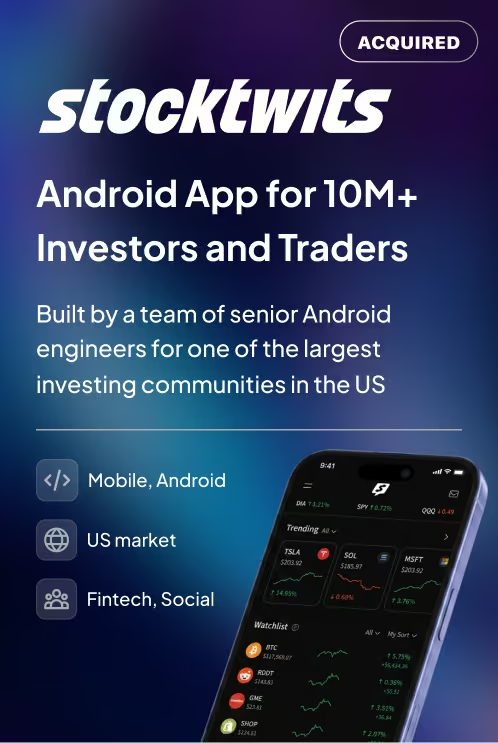
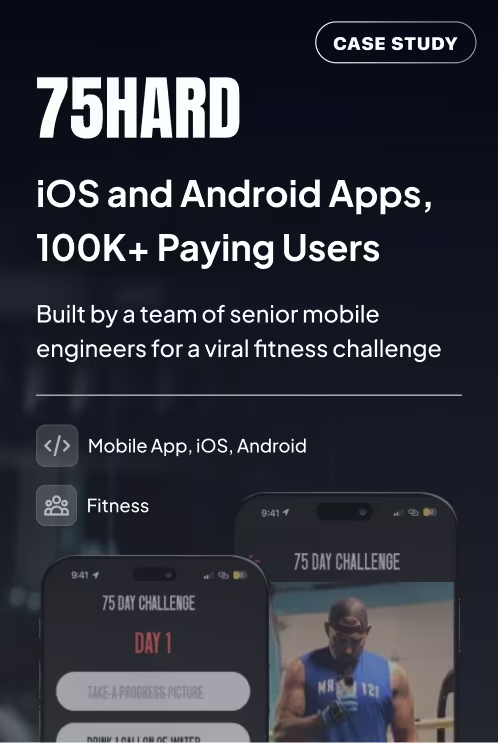
Mobile app developers, engineers, programmers, coders, consultants and dev teams for hire from DevTeam.Space, supported by an AI-driven Agile process. Top companies, startups, and enterprises choose our app developers for Native Android and iOS apps, cross-platform development.
DevTeam.Space verified reviews
4.9
based on 43 reviews as of July 28, 2026
One-Week Fit Guarantee.
Top 12 Expert Mobile App Developers to Hire in 2026
Carl Android Developer
United States
Experience: 7 years
Availability: Full-time
Android Developer at DevTeam.Space since April 14, 2019
Carl has more than 7 years of experience in mobile app development and Android app development. His primary expertise lies in Java, Kotlin, Android SDK, AndroidX, and Dagger 2. View Carl's Profile
Android Developer at DevTeam.Space since April 9, 2019
Nickey has 8 years of experience in mobile app development, with a focus on Android app development, specializing in Android Kotlin. He has passionately contributed to the development of multiple mobile applications, which have been successfully published on the Google Play Store. Expert in Android mobile app development. View Nickey's Profile
iOS Developer at DevTeam.Space since October 11, 2018
Paul has over 7 years of experience in iOS mobile application development, with a deep expertise in Swift, SwiftUI+ Combine, and Objective-C. Expert in native iOS app development and mobile app development. View Paul's Profile
React Native Developer at DevTeam.Space since November 30, 2019
Roy has 8 years of experience in mobile app development, including iOS app development, Android apps, React Native, and AI app development. He has crafted numerous high-quality mobile applications using React Native and Expo. View Roy's Profile
Flutter Developer at DevTeam.Space since January 13, 2020
Bakhrom has over 7 years of experience in mobile application development, specializing in cross-platform development as a Flutter developer, iOS and Android development, Web3, FFmpeg, and computer vision technologies. His focus is on delivering innovative hybrid mobile apps for iOS and Android platforms. View Bakhrom's Profile
iOS Developer at DevTeam.Space since October 6, 2017
Victor is a senior mobile app developer and team lead with a 12-year background in mobile application development, including iOS app development, Flutter app development, and specialization in Swift, React Native, and Flutter. View Victor's Profile
Android Developer at DevTeam.Space since October 31, 2018
Dan is a senior mobile app developer with 7 years of experience in Android app development, cross-platform mobile app development, Android apps, and React Native app development, having contributed to projects across the education, healthcare, and banking sectors. His expertise is centered on Kotlin and Java programming languages. View Dan's Profile
Android Developer at DevTeam.Space since January 31, 2018
Alexey is a senior mobile application developer with 8 years of expertise in Android app development, mobile app development, Java, and Kotlin, having contributed to numerous complex mobile app projects both as an Android developer and as a team leader. View Alexey's Profile
Android Developer at DevTeam.Space since May 22, 2019
Dean is an expert mobile app engineer with 8 years of experience in Android app development. He has a proven track record of developing numerous complex commercial Android mobile apps that have been successfully published on the Google Play Store. View Dean's Profile
Flutter Developer at DevTeam.Space since November 30, 2017
Nick is an expert Flutter mobile app developer with 7 years of experience, specializing in iOS apps, Android apps, and cross-platform app development using Flutter. View Nick's Profile
iOS Developer at DevTeam.Space since April 11, 2020
Nikita boasts 7 years of experience in mobile app development, native iOS application development with a particular expertise in Swift, Firebase, Crashlytics, and a suite of other cutting-edge technologies. View Nikita's Profile
iOS Developer at DevTeam.Space since July 31, 2020
Alex is an expert iOS developer with 7 years of expertise in mobile application development, iOS app development. He showcases a diligent work ethic in several apps published on the Apple App Store. He possesses a strong command of Swift, Firebase, and Crashlytics. View Alex's Profile
Trusted by 400+ Startups, SMBs, and Enterprises Alike
Startups from
Hiring tips and resources
How to Interview and Hire Mobile App Developers
Testimonials
Jonathon Nostrant CEO, Hardware Startup
DevTeamSpace team is proactive, drawing on operating experience to understand not only your vision but also its purpose; they are skilled, making the right judgment calls and iterating quickly; and they get customer service, providing honest counsel on cost-benefit and real-time process transparency. I highly recommend DTS and look forward to working with them again!
Nic Poulos Founding Partner, Bowery Capital
We're a hardware company and have to have top experts across all fields related to IoT. DevTeam.Space's approach was extremely appealing to us – they were able to connect expert-level dev teams for our AWS server, mobile applications, and firmware within days. Having these teams following the same structured process and supported by the AI-powered system allowed us to progress much faster. If you're looking for high-end dev resources try DevTeam.Space!
New York, NY
Rahul Thathoo CTO, MyTime
DevTeam.Space has been a great support to us. We needed help with frontend specific projects for a big release. They came on board, with almost no time taken in ramping up with our code base, and were able to deliver on time! For fast, effective service, contact DevTeam.Space.
What Our Mobile App Developers Can Do for You
Startups from
Case Study Backend Design iOS Marketing
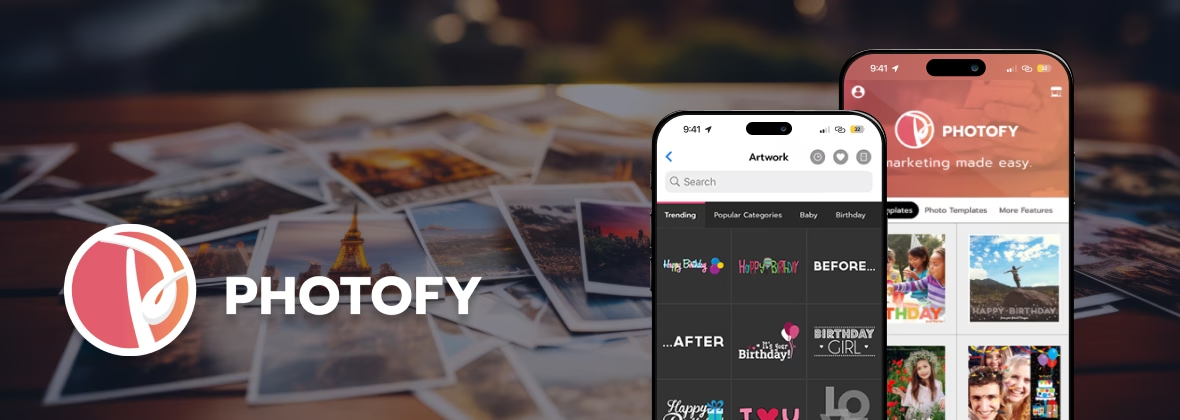
Photofy
An app to help 5M+ users create beautiful and professional photos with ease.
Submit a request. Your dedicated tech account manager will then contact you to assess your needs in detail and answer any questions.
Get the best dev team & project roll-out within days
A team of field-expert engineers is assigned to your project according to your needs. Once approved, we set up the process and get started.
Stay on top of your project & track progress in real-time
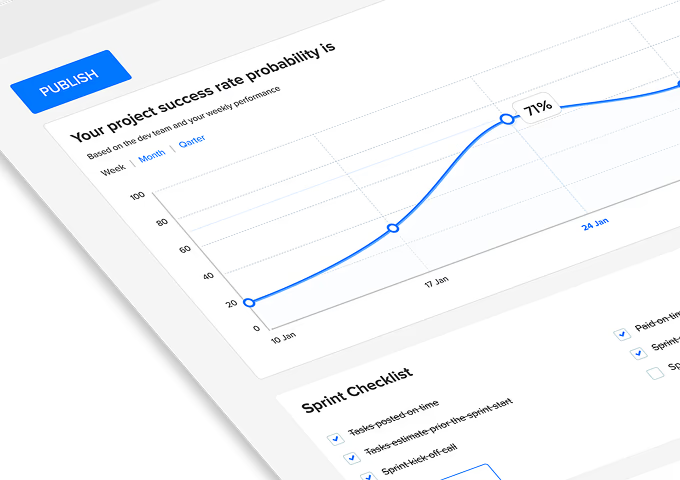
Our data-driven agile process ensures a consistent delivery on your project weekly sprints. It is transparent and provides you with regular updates and roadblock tracking.
Get the highest ROI with Zero Risk
Achieve your goals with minimum hassle, maximum ROI, and zero risk. We'll hold your payment until you are 100% satisfied and all agreed tasks are completed.
DevTeamSpace team is proactive, drawing on operating experience to understand not only your vision but also its purpose; they are skilled, making the right judgment calls and iterating quickly; and they get customer service, providing honest counsel on cost-benefit and real-time process transparency. I highly recommend DTS and look forward to working with them again!
Nic Poulos Founding Partner, Bowery Capital
We're a hardware company and have to have top experts across all fields related to IoT. DevTeam.Space's approach was extremely appealing to us – they were able to connect expert-level dev teams for our AWS server, mobile applications, and firmware within days. Having these teams following the same structured process and supported by the AI-powered system allowed us to progress much faster. If you're looking for high-end dev resources try DevTeam.Space!
New York, NY
Rahul Thathoo CTO, MyTime
DevTeam.Space has been a great support to us. We needed help with frontend specific projects for a big release. They came on board, with almost no time taken in ramping up with our code base, and were able to deliver on time! For fast, effective service, contact DevTeam.Space.
Bryan Cutter CIO, Hedge Fund Company
DevTeam.Space built a custom web portal for a hedge fund. They handled a complex development project, remaining organized and professional throughout. They're accessible and tackle any challenge. Customers can expect a quick and skilled development team.
Singapore
Alex IT Director, Non-profit Organization
We manage the IT for an almost 100 year old international Not-For-Profit Foundation. Between our inhouse team and DevTeam.Space we made our deadline, and have received overwhelmingly positive feedback from the end-users and management.
New York, NY
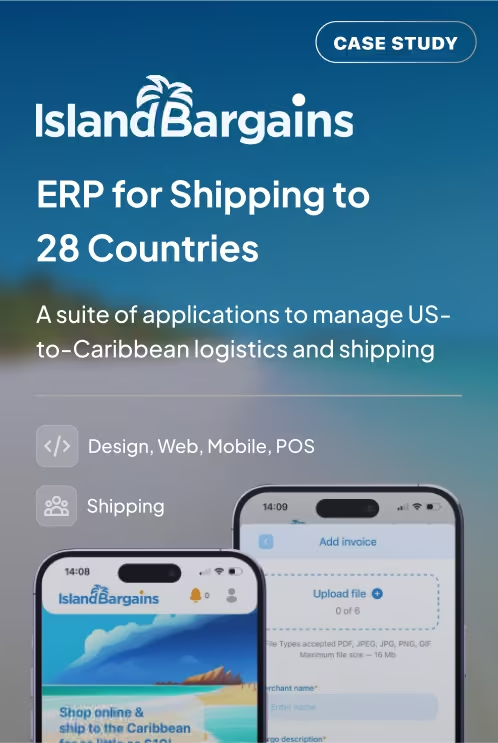
Richard Chilton Owner, Island Bargains
We needed a new long-term product development partner to identify the issues, and ideally, take over the entire product. The performance of our shipping platform increased dramatically since DevTeam.Space stepped in. We plan to continue working with them on a long term basis.
Fort Lauderdale, Florida
FAQs About Hiring Mobile App Developers
What are the capabilities of a mobile app developer?
DevTeam.Space mobile app developers' capabilities include: 1. Mobile app development consultation 2. Custom Mobile App Development 3. Native Android App Development 4. Native iOS Development 5. Cross-platform Development 6. Frontend and Backend Development 7. UI/UX Design 8. API Development 9. Mobile App Testing and Quality Assurance 10. App Store and Google Play Optimization 11. MVP development 12. Enterprise mobile app development
What frameworks and programming languages do mobile app developers use?
The cost of hiring an app developer depends on factors such as the complexity and size of your project, the developer's experience level, and their location. In the USA, for example, an average base mobile developer salary in United States is $132,894 per year. However, most companies don’t need a full-time developer but rather flexible developers to build their app. In this case, the best option is to outsource a developer. Here are the average rates of mid-level to senior developers on a per-hour basis: USA - $50 - $300 Western Europe - $65 - $200 Eastern Europe - $35 - $150 India - $10 - $65
What is a mobile app developer?
A mobile app developer is a software expert who creates software applications for mobile devices, such as iPads, smartphones and tablets. At DevTeam.Space, our mobile app developers's work include everything from ideation and design to development, testing, deployment, and ongoing maintenance, as well as publishing apps on the Apple App Store and Google Play. We specialize in both native and cross-platform app development, ensuring that your app is optimized for performance, security, and user experience on iOS, Android, or both.
How to hire an app developer?
Hiring an app developer takes 5 easy steps. These are: Step 1: Nail your app developers’ and project requirements(the most important project requirement document is a list of your mobile app’s features). Once you have a list of features, you can then clarify how many developers you may need and what skills they should possess. For example, you may want to build a simple MVP-stage app using a hybrid solution. In this case, you will likely want to hire developers who specialize in developing Flutter or React Native apps. Step 2: Choose the right developer hiring company. You have two main choices if you are not planning to hire someone in person, but rather outsource a remote developer or development team. These are: Hire Expert Mobile App Developers or an expert development team from a Software Development Company or Hire Freelance Mobile App Developers from a Freelance Hiring Platform. Step 3: Review, shortlist, and conduct a three-step interview process (primary, skills, and final) with all suitable candidates. Step 4: Thoroughly check references. This is a no-brainer, but surprisingly, many companies and startup founders don’t undertake it thoroughly enough. Remember to comprehensively check the verified reviews and references of your chosen mobile app developers. Step 5: Onboard your mobile-app-development specialist. Be sure to cover your expected working practices carefully, plus the following questions: Do they use the Agile development methodology, Waterfall, or something else? What kind of task tracker do they use, or are they happy onboarding onto your own task tracker? Do they use Slack, Discord, or something else for daily chats and reports? Will they share their code with you via their GitHub account or your repository?
How many developers do you need to build a mobile app?
To build a mobile app you need just one full stack developer or a mobile app developer as well as a designer, considering you plan a relatively straightforward native mobile app with limited functionality. An MVP prototype with several core functionalities will require anywhere from 2 to 5 developers. A complex enterprise app, however, will require the technical expertise of an entire development team of 5 to 10 expert mobile app developers, depending on the technologies required.
How long does it take to develop a mobile application?
It can take just 2 to 8 weeks to build a basic native mobile app MVP with limited functionality and launch it on Google Play or Apple AppStore. An MVP-stage mobile application can cost anywhere from $50K to $250K and the entire development process will take between 1.5 to 6 months to complete. However, a complex, multiplatform, enterprise-level mobile app will take a development team 6+ months to build. The total build time also depends on the number of app developers in your development team. If you hire a development team for a smaller project, they could finish it in a matter of weeks.
What skills does a mobile app developer need?
A Mobile app developer will need a diverce skill set, including both technical and soft skills. Technical Skills: 1. Programming Languages & Frameworks(/): 2. Android, iOS, Cross-platform app development(2): 1. Application Programming Interfaces (APIs) 2. Database Management 3. Mobile User Interface (UI) Design 4. Version Control 5. Debugging and Testing 6. Performance Optimization 7. Apple Store & Google Play Guidelines 8. Security: Knowledge of secure coding practices and encryption techniques Soft Skills: 1. Problem-solving 2. Communication and Teamwork: Collaboration with designers, product managers, and other team members is a common part of any software development, so effective communication and teamwork skills are essential. 3. Continuous Learning: The mobile app development landscape constantly evolves, so professional developers should desire to learn new technologies and stay updated with the latest trends.
Why do I need to develop a mobile application if I already have a website?
You need to develop a mobile app because it can dramatically boost your company’s user numbers, engagement, and sales. The average American spends 4.5 hours a day on their phone. Google Play users downloaded 27 billion apps in Q1 2023, while the Apple App Store saw 8.1 billion downloads. Imagine tapping into this market! So, developing a mobile app is essential, even if you already have a website.
What is the cost to publish a mobile app on the App Store or Google Play?
While there's no charge to submit your app once you’re a registered iPhone app developer, Apple does require you to have a paid developer account, which costs $99 per year. If you're building an app for internal company use only, there's also an Apple Developer Enterprise Program, which costs $299 per year. Publishing a mobile app on the Google Play Store costs $25, a one-time fee to create a developer account. This one-time fee allows you to upload and manage an unlimited number of apps without incurring additional costs for hosting them.
How long does it take for Apple and Google to approve a mobile app?
Apple’s review process typically takes about 1 to 3 days, but it can sometimes take longer, especially if your app has complex features, doesn’t follow all of Apple’s guidelines, or is submitted during busy times (like around major holidays or new iOS releases). If everything goes smoothly, many apps get approved within 24 to 48 hours. Just be sure your mobile app is polished and follows Apple’s App Store rules to avoid delays. Google's review process can take several days, sometimes up to a week or more. However, both companies say review times can vary significantly depending on factors such as the complexity of the application, the volume of applications, and the content.
How to hire mobile developers with DevTeam.Space?
To hire a mobile developers from DevTeam.Space, submit a project request on their website to schedule a free strategy session with a technical account manager. They will vet and present senior, curated, and pre-vetted developers for your project within 72 hours, using an agile process to manage development, tracking, and communication.
Why choose DevTeam.Space for your mobile app development project?
DevTeam.Space offers a wide range of mobile app development services, including comprehensive application design, integration, and management services. So, no matter whether you're developing a consumer-facing app or an enterprise-class solution, DevTeam.Space’s developers and complementary account manager are with you for the entire mobile app development process, from initial concept to delivery and ongoing support. 350+ Custom App Solutions 1200 Expert Developers and 62 Development Teams Enterprise Mobile App Development & Integrations Scalable and Maintainable Mobile Apps Architecture for Years to Come Native and Cross-Platform Development Dedicated Tech Account Manager to Organize Your Team Complimentary QA Engineers for a bug-free Product Top-rated Senior Mobile App Developers Launching Leading Mobile Solutions since 2016 End-to-End Development and Support Trusted by Global Brands like Airbus, NEC, Samsung, Disney, and others
Capabilities of Mobile App Developers
From native iOS and Android builds to AI-powered features, our vetted senior mobile app developers cover the full development cycle — architecture, design, coding, testing, launch, and long-term support. Every team is backed by our AI-powered Agile process and a dedicated tech account manager.
Native iOS App Development
Fast, secure Swift and SwiftUI apps for iPhone, iPad, Apple Watch, and Apple TV — from architecture to App Store approval.
Hire iOS developers vetted for senior Swift expertise
Full-cycle iOS app development and App Store submission
Native Android App Development
High-performance Kotlin and Java apps for smartphones, tablets, and Wear OS devices.
Custom Android app development by senior Android developers
Google Play deployment and version migrations
Cross-Platform App Development
One codebase for iOS and Android — faster time-to-market and lower cost without sacrificing native-quality UX.
Expert Flutter and React Native developers
Ideal for MVPs and fast-moving startups
AI-Powered Mobile Apps
Machine learning built directly into your mobile app — on-device or in the cloud.
Chatbots, recommendation engines, and computer vision
Custom ML models by expert AI developers
Mobile UI/UX Design
Intuitive, conversion-focused interfaces that follow Apple and Google design guidelines.
Accessibility-first mobile design
Designers and developers working as one team
Backend & API Development for Mobile Applications
Scalable server-side architecture that grows with your user base.
Cloud infrastructure and REST/GraphQL APIs — expert back-end development
Payments, geolocation, live chat, and push notifications
QA, Security & App Store Launch
Automated and manual testing, secure coding, and a fully managed launch on both stores.
Complimentary QA engineers on every project
Data encryption and regulatory compliance
Enterprise Mobile Apps & Integrations
Enterprise-grade mobile solutions connected to your existing business systems.
CRM, ERP, IoT, and legacy integrations
Secure, scalable multi-market architecture
App Maintenance & Modernization
Long-term support and modernization that keep your app fast, stable, and up to date.
Performance optimization and OS updates
Legacy revamps via ongoing mobile app development services
20 min read
Hire Mobile Application Developers for Your Project from Our Expert Development Teams
All of DevTeam.Space expert developers go through a professional vetting process to validate their highest level of expertise in a particular technology stack, industries, and application types for commercial markets that correlate with the article's subject matter.
★Experience
All of DevTeam.Space expert developers possess 4 or more years of commercial software development experience. They are either mid-level or senior-level software engineers focusing on a particular technology stack, industry, or application type.
Are you looking for mobile app developers to build and launch an innovative mobile app using Flutter and React Native for cross-platform development, or using Swift for native iOS and Kotlin for Android?
If yes, read on as we cover valuable information on hiring mobile app developers, including developer costs, examples of industry-focused mobile applications, interview questions and answers for iOS, Android, and cross-platform app developers, and a mobile app developer job description template.
Table of contents:
Mobile Application Tech Trends and Market
What Kind of Mobile App Developers (native Android, native iOS, Cross-Platform) Do You Need?
What Frameworks, Programming Languages, and Tools Do Mobile App Developers Use?
Industry-Focused App Development
Factors that Affect the Cost of Hiring a Mobile App Developer:
How Much Does it Cost to Hire an App Developer?
Mobile App Development Costs in 2026
Hiring Mobile App Developers: 5 Steps
5 Best Companies to Hire a Mobile App Developer and Dev Teams
A List of Mobile App Features
DevTeam.Space Key Services
Mobile App Development Process
Mobile App Development Costs and Timelines at DevTeam.Space
Conclusion
Google Play Store and Apple App Store are the largest mobile app marketplaces in the world, hosting over 5 million applications. Google Play users downloaded 25.6 billion apps in Q1 2024, with 139 billion projected for 2026. While Apple’s users downloaded 8.4 billion apps in Q1 2024, it is projected to reach 92 billion downloads by the end of 2026.
However, only the best mobile apps succeed if you partner with the best mobile development company or expert development team; your app could be one of them.
Hire a Mobile App Developer for App Development Services
At DevTeam.Space, our mobile app developers specialize in creating innovative solutions that meet all our clients’ goals and dreams, as well as market demands, brand identity, and business growth. With over a decade of experience, we tailor every app to deliver maximum impact for your business.
Mobile App Developers
Mobile app development or mobile app development services refers to the creation of software applications that run on mobile devices.
A mobile developer or mobile engineer is a professional software engineer who specializes in designing, building, and maintaining applications for mobile devices. Mobile app development technologies are iOS(Swift, Objective-C) and Android (Java, Python, Kotlin, C++, Dart, etc.) Hybrid or cross-platform (React Native, Apache Cordova, Flutter, etc).
iOS App Developers
iOS development or custom iPhone app development services refer to a specific type of app development that involves the building and maintenance of iOS applications that run on Apple devices such as iPhones and iPads.
The most common examples of iOS development services include iOS smartphone app development (iPhone), tablet app development (iPad), iOS foldable app development, and iOS auto app development for vehicles. iOS development services include iWatch app development, Apple TV app development, iPad app development, and multi-platform development, along with custom iOS application development, the creation of enterprise iOS apps, and consultation services.
An iOS developer is a term that refers to a professional iOS software engineer who specializes in designing, building, and maintaining apps for the iOS platform. Additional roles that iOS developers are involved in include iOS software testing and undertaking integration and migration services. The main iOS development technologies include Swift and Objective-C, though Objective-C is becoming increasingly outdated, and an iOS development environment like Xcode.
Android App Developers
An Android app developer is a professional who designs, develops, and maintains applications for Android devices, such as smartphones and tablets. As well as prepare apps for deployment on the Google Play Store.
An Android developer is a software engineer who focuses on building, maintaining, and testing Android apps. They also must undertake Android software testing and integration of new features or version migration, etc. Android development utilizes programming languages like Java, Kotlin, and C++, with Android Studio being the most popular integrated development environment (IDE).
Android app development services also extend to multi-platform development (i.e., creating a hybrid Android / iOS app), as well as custom Android application development, Android UI/UX design, and consultation services. In recent years, Android Wear OS development (for wearable devices) has become a larger and larger segment of Android development. Native Android app development involves hiring Android developers. Most Android applications are written in just two languages: Java and Kotlin. You will most likely need an Android developer who is familiar with one or both.
Cross-platform App Developers
The hybrid app development approach enables you to create mobile apps that run on multiple operating systems, such as Android and iOS, using a single codebase.
Cross-platform app development is an approach that allows your app to run on multiple operating systems, such as iOS, Android, etc., from a single codebase. With it, developers can "write once, run anywhere", which saves time and reduces costs when compared to developing native apps for each system.
Cross-platform apps have pros and cons compared to Native apps. The primary advantage is the time and money savings achieved by developing a hybrid app with a single codebase. The main disadvantage of hybrid apps is that they may hit certain platform-specific limitations. For example, specific Android or iOS features may not be available, and hybrid apps are generally slower than native apps.
The most popular frameworks for cross-platform app development are React Native and Flutter. Flutter and React Native are both excellent frameworks for saving time and money when launching iOS and Android mobile apps simultaneously.
Back-End App Developers
Back-end app development services focus on building and maintaining the server-side logic, databases, and APIs that power web and mobile applications. Back-end developers specialize in creating efficient, scalable systems that handle data processing, business logic, and integration with front-end components.
The most popular backend programming languages include Node.js, Swift, Python, Ruby, Java, and GoLang. Other examples of popular tools used in backend development include databases such as MySQL, MongoDB, and PostgreSQL, which ensure fast and secure data transfer and storage, etc.
Backend developers and backend development teams need to work closely with front-end developers to deliver seamless, end-to-end solutions that are performant, scalable, secure, and maintainable.
Mobile App Design
UI design is a branch of mobile app development that forms the backbone of successful software applications. Whether you are building a website, application, or portal, UI designers aid you in building a series of interactive processes that users have with your digital products. Expert UI designers are crucial in helping you optimize both the visual and interactive elements to your digital offer so you can align your product with the expectations of your user.
Mobile App Testing and QA App Development
Quality Assurance (QA) App Development Services focus on ensuring that applications built during the software development process are the very best they can be. QA specialists are experts in detecting and rectifying issues known as bugs that negatively affect software performance, functionality, and security.
QA engineers use both manual and automated testing to ensure that applications are robust and meet business objectives before release. To do this, they utilize a range of quality assurance solutions such as acceptance tests, stress tests, and security assessments.
We provide continuous feedback loops: mobile app testing is integrated into weekly development sprints, allowing for rapid iteration and bug fixes.
What kind of frameworks, programming languages, and tools do a mobile app developer use?
At DevTeam.Space, we employ a wide array of robust technologies to build mobile apps that meet the specific needs of your business. Whether developing native iOS and Android apps or cross-platform solutions, we utilize the most advanced tools available to ensure high performance and reliability.
Mobile App Developers' Frameworks, tools, and Languages include:
Front-end development: HTML, CSS, JavaScript, and powerful frameworks like React, Angular, and Vue.js
Back-end Development: Node.js, Ruby on Rails (RoR), Python, Firebase.
Back-end service providers: Google Cloud Platform (GCP), Amazon Web Services (AWS), Microsoft Azure’s cloud platform
Objective-C(for iOS app development)
Objective-C is Apple's original programming language that, while largely succeeded by Swift, remains relevant for maintaining and extending legacy Apple apps.
Objective-C was the primary language used for iOS app development until the release of Swift. Many Objective-C developers have now learned Swift. The Objective-C programming language is typically used to maintain and enhance existing iOS apps, rather than to develop new ones.
Swift(for iOS app development)
Swift is Apple's newest programming language. Introduced in 2014, it's modern and powerful. Experienced Swift developers can create virtually any iOS app imaginable. Swift is Apple's primary programming language for building apps on iOS, macOS, etc. It's known to be fast, safe, and expressive, which is why it's the main choice for building high-performing native Apple apps.
Swift development services provide specialized expertise for building high-performance, secure, and modern applications tailored to the Apple ecosystem (iOS, macOS, watchOS, tvOS). These services encompass custom application development, UI/UX design, migration from Objective-C, and API integration, helping companies create native, user-friendly products.
Java(for Android app development)
Java development is the process of building applications using the Java programming language. This versatile programming language, created way back in 1995, can be used to develop web, desktop, and mobile applications. It is widely used in Android app development.
Java engineers, aka. Java developers are onboarded to projects to help create anything from startup MVP mobile apps to complex, custom enterprise-level applications. With so many companies looking to hire a senior or freelance Java developer for short-term Java applications, the demand for good Java programmers will always be high.
Java developers must be skilled and experienced at working with the latest Java technologies & frameworks, ensuring that your applications are built to modern standards and optimized for maximum performance (without which, you can say goodbye to many users).
To hire Java developers (also referred to as Java coders, Java engineers) or Java consultants, you should create a Java developer job description template that outlines the necessary skills and responsibilities. A good set of Java developer interview questions is crucial to assess the expertise of candidate Java developers, as is a professional who is an expert in the Java programming language and its supporting technologies.
So, whether you are planning to build a complex web system or mobile application, or are a Java developer or development team, you need the technical know-how required to deliver successful software solutions.
Kotlin was released in 2017. It is a modern programming language that offers interoperability with Java. It is already extremely popular and may one day overtake Java to become the number-one Android app development language. Kotlin is the new, preferred language for building native Android apps. It's considered more concise, safer, and more fully interoperable with Java, which is why it's used for both new Android projects and modernizing existing ones.
React Native(for cross-platform app development)
React Native is a cross-platform framework that allows developers to build mobile apps for iOS and Android using JavaScript. It's known for enabling cross-platform sharing while still delivering a native look and feel across apps.
React Native application development services provide specialized professional support for building cross-platform mobile applications using the React Native framework. These services enable companies to develop applications for iOS and Android using a single codebase in JavaScript or TypeScript, thereby significantly reducing development time and costs.
Flutter(for cross-platform app development)
Flutter is Google's open-source framework for building natively compiled apps for mobile, web, and desktop from a single codebase. It uses the Dart programming language to enable fast performance and an expressive UI.
Flutter app development services involve utilizing Google's Flutter UI toolkit to build, test, and deploy high-performance applications from a single codebase. These services are in high demand primarily because they can deliver a "native" user experience across iOS, Android, the web, and desktop platforms.
Front-End
Front-end development services focus on building the user-facing (user interface or UI) components of web applications and websites. Good front-end developers will be able to create highly responsive, visually appealing interfaces that work seamlessly across various devices. Front-end engineers utilize technologies like HTML, CSS, JavaScript, and powerful frameworks like React, Angular, and Vue.js to create exciting, interactive website UIs that offer the best user experience.
The primary task of front-end developers is to turn application design mockups into functional code, which ensures all UI features like buttons, dropdowns, virtual keyboards, etc, are both responsive and reliable. Front-end professionals work with UX/UI designers and back-end developers closely to optimize the user experience, focusing on elements such as performance, accessibility, and cross-browser compatibility.
Back-End
Back-end development services focus on building and maintaining the server-side logic, databases, and APIs that power web and mobile applications. Back-end developers specialize in creating efficient, scalable systems that handle data processing, business logic, and integration with front-end components.
The most popular backend programming languages include Node.js, Swift, Python, Ruby, Java, and Golang. Other examples of popular tools used in backend development include databases such as MySQL, MongoDB, and PostgreSQL, which ensure fast and secure data transfer and storage, etc.
Backend developers and backend development teams need to work closely with front-end developers to deliver seamless, end-to-end solutions that are performant, scalable, secure, and maintainable.
Your mobile app will work with a specific back-end and server. That means you will also need expert back-end developers skilled and experienced in setting up server environments and coding the mobile app backend.
Industry- Focused Mobile App Development
Mobile app developers are creating hundreds of mobile applications that cater to various industries, enabling businesses, from startups to established enterprises, to deliver cutting-edge digital solutions. Mobile app experts are building apps for all industry segments:
1. Fintech and Blockchain
Fintech mobile app developers create software solutions that offer efficiency, security, and simplicity for a variety of uses, including trading, international payments, and staying current with market developments.
2. Mobile Banking & Wallet
You can significantly enhance the banking experience you deliver to your clients by developing mobile apps that offer secure, practical tools for account management, money transfers, and payment processing.
The development team can help you build state-of-the-art mobile banking apps and digital wallets that provide trustworthy, fast, and secure financial transactions, allowing your clients to have total control over their money at their fingertips.
3. Construction Apps
Hire our mobile app developers to build construction apps and platforms. By automating activities, tracking progress, and ensuring on-time completion, mobile apps can help you increase the productivity of your construction projects. Using the mobile app development services offered by DevTeam.Space, you can create robust mobile applications that improve collaboration, resource management, and project management.
Our developers have worked with businesses to create apps that, by saving time and money, help construction companies stay within budget and schedule.
4. Transportation & Logistics Apps
Use logistics and transportation mobile apps to improve your company's operational efficiency. Whether you require API interfaces, CRM systems, or payment processing, DevTeam.Space engineers can create technological solutions that can streamline operations from start to finish, improve customer satisfaction, and simplify logistical processes.
5. Insurance Apps
Utilize mobile apps to expedite client assistance, manage policies, and handle claims to streamline insurance services. Mobile apps with numerous features that facilitate quicker and more efficient communication between policyholders and insurers can be developed quickly and efficiently. Insurance app developers can help you create innovative solutions that will let you successfully manage business operations and deliver top-notch customer service.
6. Healthcare
Tailored mobile solutions have the potential to transform patient care and enhance healthcare operations. Numerous healthcare apps, including telemedicine platforms, have been developed by our app developers to enhance patient care and satisfaction, as well as improve organizational efficiency.
7. eCommerce
With the help of an intuitive, feature-rich eCommerce app, transform your company. We offer e-commerce app development services to improve the shopping experience. We offer scalable, secure systems with integrated payment gateways, user-friendly shopping interfaces, and real-time inventory management.
Expert engineers create cutting-edge mobile apps for other industries, including: Business Stock Exchange Apps, eWallet/Crypto Wallet Mobile Apps, Agriculture Apps, Telemedicine Apps, Hotel Booking Apps, Augmented Reality (AR) Apps, Delivery, Fitness, Travel & Hospitality, Construction, Food & Restaurants applications, and many other industries.
8. Food & Restaurants Apps
Hire our expert app developers and permit users to use your mobile app to expedite ordering, reservations, and customer service, enhancing their dining experience. DevTeam.Space can develop user-friendly applications that enhance customer relations, order management, and service quality for the food and restaurant industries. Our developers can help your UX by fostering long-lasting relationships with your customers by providing everything from personalized meals to expedited payment options, and more.
Factors that affect the cost of hiring a mobile app developer:
1. An app developer's skill level There is a significant cost difference between hiring a mid-level mobile app developer and a senior one. The reason for this is obvious: 3 to 6 years of experience to become a mid-level developer vs. 5 to 10 years to become a senior developer. All that extra experience pays off when developing any complex custom mobile app feature. A senior developer is more likely to know the best solutions, leading to faster development times, better performance, and fewer bugs.
2. An app developer's location Developers in the United States, Canada, and Europe need to charge higher hourly rates due to the higher cost of living in these regions. Generally, the cheaper the country, the lower the mobile app developer costs. However, India produces millions of new developers every year. This increases competition and drives down the hourly price.
3. Full-time Mobile App Developer vs. hourly It is cheaper to hire a mobile app developer full-time than to pay by the hour. A full-time mobile app developer can be paid less overall because they have job security and a regular paycheck. However, most companies only need a mobile app developer to build their new app, so they don’t need to hire a developer full-time. This is why hourly developers are the only option.
4. Remote vs. in-house. Hiring remote developers allows you to access a vast pool of developers. This can not only help you find the exact skills that you need but also help to reduce costs vs. hiring full-time, in-house developers. Since there are so many programmers competing for jobs, it reduces the hourly rate.
However, don’t focus on trying to save money when hiring developers. Hiring cheap developers nearly always ends up costing you more due to their taking longer to develop mobile apps and debug their poorer-quality code.
How much does it cost to hire a mobile app developer?
The cost of hiring a mobile app developer in various regions worldwide, as well as the cost of hiring developers on a full-time basis in different parts of the USA, depends on their experience level. Explore our cost guide to determine what you can afford.
A new report shows that the estimated average income for an app developer in the USA is $110.000 per year as of 2026.
If you live in the United States, make sure you hire from a US-based company; otherwise, it will be extremely difficult to ensure you can exercise your legal rights as per your contract should anything go wrong. Added to this, working with people from the same culture goes a long way when you work on innovative, complex mobile apps.
A mobile app developer from a different country:
The United States: $55–$300 per hour, or $10,400-$48,000 per month, $124,800-$576,000 per year.
Western Europe: $45 – $200 per hour, or $8,000 to $32,000 per month, $96,000 to $384,000 per year full-time.
Eastern Europe: $35 – $150 per hour, or $5,600 to $24,000 per month, $67,200 to $288,000 per year full-time.
In-house app developer from different states:
The following are the costs to hire a mid-level (lower figure) and senior-level (higher figure) in-house (full-time) developer by U.S. state. These numbers reflect extensive research, according to several sources and American companies. Approximate salaries at Google are $147,524/year or $71/hour, while at Facebook they are $109,905/year or $53/hour.
As I mentioned above, if you are based in the United States, I highly recommend hiring developers from a U.S.-based software company.
Hiring a mobile app developer from California (San Diego, Los Angeles, San Francisco): $124,800 to $284,000 per year
Hiring a mobile app developer from Colorado (Denver, Colorado Springs, Greenwood Village): $111,000 – $124,000 per year
Hiring a mobile app developer from Illinois (Chicago, Buffalo Grove, Deerfield): $106,228 – $123,440 per year
Maryland (Fort Washington, Baltimore, Annapolis): $90,001 – $115,000 per year
Massachusetts (Boston, Worcester, Springfield): $112,500 – $113,875 per year
New York (Albany, New York, Brooklyn): $112,500 – $166,400 per year
Texas (Austin, Houston, Dallas): $93,917 – $121,811 per year.
How Much Does It Cost to Develop a Mobile App in 2026?
The cost typically ranges from $15,000 for simple apps to $500,000 or more for complex applications. Exact pricing depends on your app’s type, complexity, team requirements, timeline, and infrastructure needs.
I can tell you one thing for sure: the cost of developing your app will be unique to your specific project requirements. This is because no one app is the same. If you wanted to create a custom car or dress, then naturally, the variations that you choose to add would require a certain amount of extra time and materials; software development is no different.
To help you get a rough idea of what your application is going to cost to build, I have included a few examples below.
Mobile Application Development Costs
A simple Android or iOS mobile app to test the marketplace: $5,000 to $50,000, depending on the complexity. Typically, it will take 1 to 3 expert mobile app developers between 1 and 8 weeks to complete.
An example of this kind of app is a simple image-generation app that utilizes GIF-generation technology. This technology can be used to create GIFs from any uploaded picture in seconds. The goal of this prototype iOS application could be to test the social media market to see if creators and consumers are interested before developing it further.
A mobile app MVP with several custom features: $50,000 to $250,000, again, depending on the complexity. This kind of project can take 2 or more mobile developers anywhere from 1 and a half to 6 months to complete. If the client chooses to keep pushing development based on the latest customer feedback, as is the case with all the cutting-edge companies, the development cycle can literally go on for a very long time.
A good example of this type of software project is a custom education mobile app MVP for both the iOS and Android platforms that required the development of several custom app features.
A complex, enterprise-level mobile app with multiple custom features: $250,000 or more. Typically, a complex app development project like this will require a team of 6 or more full-time developers along with a designer, QA engineers, a DevOps engineer, a project manager, and any other specialists that your unique project specifications require. Think of the Uber app or Booking.com.
A List of Mobile App Features
Your list of mobile app features can include anything from the ability to:
Sign up / sign in via email or Google account
Navigate a map
Purchase items from an online store
Order a taxi ride
Social media integration
Camera access
Push notifications
In-app search
Offline functionality
How much would it cost to hire the best mobile app developers to build your app? Is your project self-funded, or are you looking to raise funds? Are you working for a large company or a startup founder?
If you want to raise funds, the best approach is to undertake the design phase. Having a conceptual blueprint of your app will 10x your chances of raising funds on better terms.
Key Mobile App Developers' Skills
At DevTeam.Space, we provide comprehensive, end-to-end digital solutions to help you achieve your business goals. From product discovery to post-launch maintenance, we ensure that every aspect of your mobile app journey is meticulously crafted to perfection.
1. Full-Cycle Mobile App Development for Popular Platforms
Our full-cycle development process covers everything from initial concept to launch, delivering innovative software that meets user needs and adheres to strict timelines and budget constraints.
2. Product Discovery & Product Research
As a top player in product discovery and research, we help you define your product's vision, explore market opportunities, and align features with user needs before development begins.
3. Mobile App Design, UX/UI Design & Branding
We craft mobile app designs that not only look stunning but are also optimized for usability, creating seamless user experiences that enhance your brand and drive engagement.
4. Automated QA on All Mobile Devices
Our automated quality assurance ensures seamless performance across all major mobile devices, giving you confidence that your app will function flawlessly for users.
5. Power Management, Notifications & Location Services
We integrate energy-efficient solutions, precise geolocation, and real-time notification services to enhance both performance and user engagement.
6. Embedded Android & AOSP Customizations
Our custom Android and AOSP solutions maximize app functionality and ensure compatibility with unique hardware configurations tailored to your specific requirements.
7. Maintenance, Post-release Support, and Scalability
We provide ongoing maintenance and post-launch support to ensure your mobile app runs smoothly, with updates and fixes available whenever needed.
8. Native Mobile App Development (Android & iOS)
We build high-performance native apps for both Android and iOS platforms, delivering tailored solutions that leverage the full potential of each platform's unique features.
9. Cross-Platform Mobile App Development
Our cross-platform app development ensures that your mobile app works smoothly on both Android and iOS, giving you a broad reach without sacrificing performance or quality.
10. Customer Insights & Behavior Analytics
We provide valuable insights into customer behavior through analytics, helping you understand your users, improve app performance, and drive business growth.
11. AI Integration in Mobile Apps
We incorporate artificial intelligence into mobile apps, enhancing functionality with smart features like personalized recommendations, predictive analytics, and automation.
12. Mobile App Integration, Testing & QA
We specialize in integrating mobile apps with your existing systems while ensuring thorough testing and quality assurance to deliver a flawless end product.
13. Mobile App Modernization
We breathe new life into your existing mobile apps, modernizing outdated systems, enhancing performance, and implementing the latest technologies.
Top Company to Hire Developers from in 2026
Every year, demand is growing for both in-house software development employees and remote developers, be they freelancers from freelance platforms or dedicated developers outsourced from professional software development companies. You can see this growth in the statistics below. DevTeam.Space: Expert Mobile App Development Company
DevTeam.Space is an innovative American mobile app development company with an over 99% project success rate. We build reliable and scalable custom software applications, mobile apps, websites, live-streaming software applications, speech recognition systems, ChatGPT and AI-powered solutions, and IoT solutions, and conduct complex software integrations for various industries, including finance, hospitality, healthcare, music, entertainment, gaming, e-commerce, banking, construction, and education software solutions on time and budget.
Our top software development company has an invite-only vetted community of expert software development teams supported by an AI-powered agile process.
Our software development service not only allows startup and established companies to outsource their entire project development, but also to hire expert software developers or entire development teams as and when they need them via our simple hiring process.
We have a community of software development teams and developers who undergo continuous up-to-date training and are well-supported by the company and our unique AI-powered Agile process. We have worked with leading brands like Airbus, Disney, NEC, and Samsung, offering both part-time and full-time hiring options for software development outsourcing and outstaffing.
DevTeam.Space supports its clients with business analysts and dedicated tech account managers who monitor tech innovations and new developments and help our clients design, architect, and develop applications that will be relevant and easily upgradeable in the years to come.
As a result, over 35% of our clients have chosen to continue working with us for many years after the original development in order to support and maintain their applications.
DevTeam.Space has a Clutch review score of 4.9/5 and a Trustpilot review score of 5/5. This is very impressive and highlights just how satisfied our customers are with us.
Pros
One of the top software development companies in the United States, where companies can find the best developers (web, mobile app, AI and ML engineers, blockchain developers, etc) for any tech stack and designers (web and mobile) who represent the best quality and reliability that money can buy. Each developer comes with 6-15 years of experience working in your industry segment.
All DevTeam.Space’s expert application developers and development teams are supervised by a highly experienced account manager who manages them to ensure they always adhere to the platform’s exceptional standards of excellence. Added to this, the company assigns a separate, free quality assurance QA engineer to check the final product, something which any freelance or software development platform would charge you an additional $55-$120 per hour, or $4,000-$120,000 per project, depending on the project size.
Our company ensures our clients that we will deliver the project on time and on budget. (Some projects have been delivered 3x times faster because of the client demand).
Cons
Not suitable for projects under $3,000 due to the high-quality end-product produced by the platform, requiring enough development time to complete. For projects under $3000, it would be better to hire a freelancer from Freelancer.com, Toptal, Fiverr, or Upwork, where rates are lower. Keep in mind that skills and experience will also be lower. I will cover these platforms in a minute.
“DevTeam.Space proved to be a highly responsive and skillful partner in tech, project management, and communication despite the time difference between Dubai and the US.”
Conclusion
Finding the perfect mobile app developer for your project is not hard when you know exactly where to look.
After you post the project request, one of the DevTeam.Space dedicated technical account managers will get in touch to arrange a complimentary discovery call.
Connor WoolpertTravel app · built with DevTeam.Space
Want developers like Connor's?
“They can give you the system, show you the processes.”
One-Week Fit Guarantee Ready to start in 72h
Video testimonial from Jonathon Nostrant
Jonathon NostrantVoice-activated IoT device · built with DevTeam.Space
Want developers like Jonathon's?
“They understood the code. They ramped up very quickly.”
One-Week Fit Guarantee Ready to start in 72h
Video testimonial from Preston Brown
Preston BrownDental staffing marketplace · built with DevTeam.Space
Want developers like Preston's?
“100% I would recommend DevTeam.Space.”
One-Week Fit Guarantee Ready to start in 72h
Video testimonial from Matthew Schulman
Matthew SchulmanInventory and CRM platform · built with DevTeam.Space
Want developers like Matthew's?
“They had all the resources under one roof.”
One-Week Fit Guarantee Ready to start in 72h
What Our Clients Say
Video testimonial from Connor Woolpert
Connor WoolpertTravel app · built with DevTeam.Space
Want developers like Connor's?
“They can give you the system, show you the processes.”
One-Week Fit Guarantee Ready to start in 72h
Video testimonial from Jonathon Nostrant
Jonathon NostrantVoice-activated IoT device · built with DevTeam.Space
Want developers like Jonathon's?
“They understood the code. They ramped up very quickly.”
One-Week Fit Guarantee Ready to start in 72h
Video testimonial from Preston Brown
Preston BrownDental staffing marketplace · built with DevTeam.Space
Want developers like Preston's?
“100% I would recommend DevTeam.Space.”
One-Week Fit Guarantee Ready to start in 72h
Video testimonial from Matthew Schulman
Matthew SchulmanInventory and CRM platform · built with DevTeam.Space
Want developers like Matthew's?
“They had all the resources under one roof.”
One-Week Fit Guarantee Ready to start in 72h
As Seen On
New Internet Unicorns Will Be Built Remotely Article page
DevTeam.Space's goal is to be the most well-organized solution for outsourcing Article page
The Tricks To Hiring and Managing a Virtual Work Force Article page
Featured DevTeam.Space Mobile App Articles
Explore our in-depth product development tutorials and new technology announcements created by our software development experts. Our content created by humans for humans.