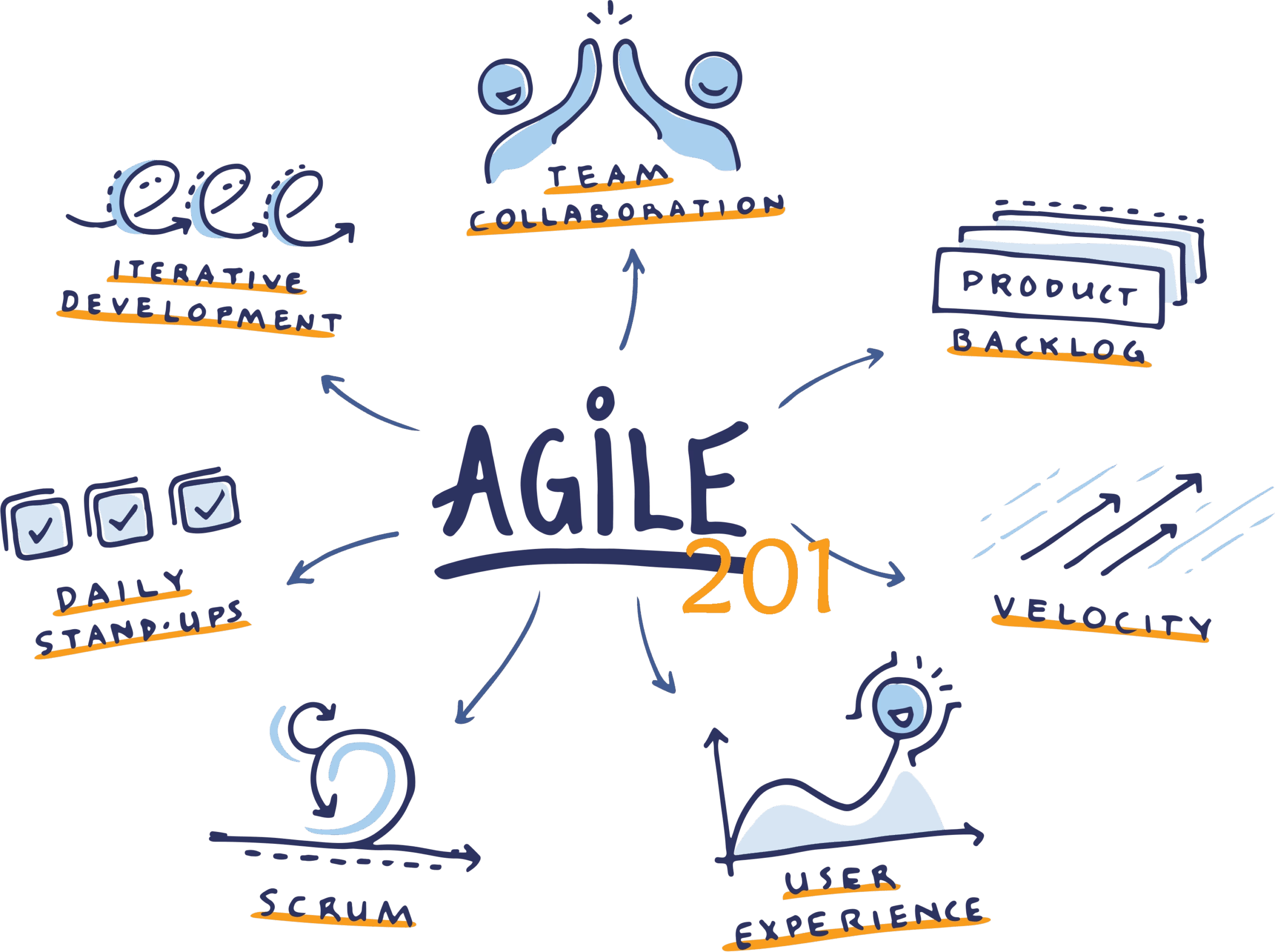

Are you interested in implementing agile project management best practices in your organization?
The agile development methodology is the most popular trend in the software development industry today.
According to a new research report, at least 71% of U.S. companies are now using Agile; agile projects are 1.5 times more likely to be successful than traditional waterfall-based software projects. Companies experience 60% growth in revenue after adopting agile project management.
The statistics show the promising potential of agile development methodology for businesses. Let’s discuss agile development and some of the best practices of agile project management.
What is Agile in simple words?
Agile is a software development methodology that focuses on flexibility and efficiency. It is suited for developing products for a volatile market where requirements evolve quickly, and traditional approaches of rigid and longer software development cycles do not work effectively.
Agile methodologies break down the enormous task of developing a complex software product into smaller and more manageable development tasks.
The collaborative efforts of the whole team help in defining these sub-tasks and producing a workable solution at the end of each development cycle.
The result is a timely response to user market requirements with increased flexibility of going back for improvements and utilizing the individual skills and collective expertise of the whole product development team.
What are Agile project management frameworks?
Agile project management approaches encompass various frameworks, practices, and tools that help in implementing agile project management while developing software products.
Some of the commonly used agile frameworks include Scrum, Kanban, Lean, and XP (Extreme Programming).
Scrum is widely adopted by professional software development companies to develop market-competitive software solutions.
You can read our blogs for more information on what Scrum is and how to build one.
Agile Development Methodology Best Practices
Some of the agile development methodology best practices include the following:
1. Customer Interaction
Agile Manifesto states prioritizing customer collaboration over negotiating contracts. Agile development emphasizes close customer interaction throughout the development lifecycle.
Compared to traditional software development methodologies, where user requirements are gathered and fixed at the beginning of the development cycle, agile emphasizes customer interaction throughout, with customers and product developers discussing product requirements, clarifying expectations, and collaborating on future improvements.
Frequent interactions with customers help address changes in user requirements and meet users’ expectations on time.
This results in high-quality products that meet customer requirements, as customer satisfaction is a top priority across industries.
2. Prioritize Product Backlog
A product backlog is an important part of an agile project management process. It contains all the required information for the successful implementation of the project.
Among good agile project management best practices is to write the product backlog as a priority. The product owner leads product backlog development by listing the required product features in high-to-low priority.
This product backlog further helps the development team in figuring out the features that need to be implemented in the initial iterations, modifications that should be addressed first, etc.
Another good agile project management practice is to involve all stakeholders and concerned teams in the product backlog development.
This helps keep all team members familiar with the progress of the project, high-priority tasks, etc. Moreover, they get a better understanding of the product they are developing.
3. Iterative Development
Among agile project management best practices, the key one is iterative development. As stated, agile development methodology breaks down the whole development process into smaller tasks or development iterations.
These iterations are called sprints in the Scrum development framework.
A sprint is intended for building and deploying a working product feature at the end of each iteration. Users use this feature and provide their feedback. The product is then improved based on customer feedback.
The continuous development process allows continuous enhancement of the software product as per users’ requirements.
4. Conduct Frequent Meetings
Agile project management focuses on short but regular meetings. The development team conducts daily stand-ups to touch base on what is done, what needs to be done, the roadblocks, and solutions.
A weekly meeting or sprint review meeting helps in analyzing the weekly performance of the team and the overall progress of the project.
A retrospective meeting is conducted after the sprint is concluded. This is a lessons-learned session to discuss mistakes and lessons learned from them.
All these meetings in the agile project management process help in giving a clear view of the project’s progress, including participation and engagement from each team member.
5. Continuous Improvement
Agile development frameworks, especially lean methodology, are based on continuous improvement of the process and product requirements.
An important aspect is to keep all team members updated with the latest requirements through proper communication to accelerate the process of continuous improvement and build a successful product.
6. Workflow Visualization
Visualizing workflows is among agile best practices. The infographics and charts help to track the progress of the project. The team members can easily find the tasks that need to be completed as a priority, hurdles in the successful completion of tasks, etc.
Kanban boards or whiteboards are commonly used to track tasks in software development projects through interactive visualizations.
7. Continuous Testing
Agile development puts greater emphasis on product testing. Testing of code pieces is conducted in conjunction with writing the code.
Continuous testing helps in finding and fixing bugs in individual product components before they hinder the smooth running of the whole application.
Testing procedures like unit testing, integration testing, penetration testing, etc., help in successfully removing all development errors and developing bug-free software.
Test-driven development is also an important aspect of agile development, where code test cases are given precedence over code development.
Agile TDD refers to first writing test cases for software feature requirements and then coding these features to pass the set test cases. The new code also should not modify the existing product functionality.
The test-driven development approach encourages writing less and cleaner code that meets the requirements. Useless or extra code lines are continuously refactored.
8. Waste Elimination
Agile project management best practices include reducing waste in your product development and management processes as compared to traditional project management methodologies.
This means eliminating all routines, documents, communication channels, supporting tools, etc., that add a hindrance to efficient and flexible agile development and management of the product.
Lean development methodology, a prominent agile methodology, primarily focuses on reducing waste, whether it is feature requirements or project files, etc.
This also helps team members to focus on important tasks that actually add value to the product development process.
9. Collaborative Teams
Agile project management fosters close collaboration and interaction between team members.
Although the development methodology empowers individual team members to take part in the planning process and work independently on building product features, it encourages the formation of collaborative relationships where members learn from their mentors, and agile leaders appreciate their team members for adding value to the whole agile development process.
Pair programming, another agile development practice, focuses on a collaborative effort by software developers. It is a software development technique in the agile extreme programming process where two developers form a team to design, code, and test user stories on one system.
10. Use Supporting Tools
Another agile project management best practice is the use of professional tools for managing your development process effectively. You need to provide tools to your business and product development teams so they can better track their progress and collaborate.
Some of the agile project development and project management tools include:
- ProofHub provides Kanban boards and Gantt charts to organize and streamline project tasks with a range of features like online proofing, chat interface, task labeling, etc.
- Wrike helps set up multiple projects and keep track of the progress of each through an interactive interface and even a mobile app.
- Asana for planning, organizing, and tracking the project’s progress through sprint planning, communication, etc.
- Jira is a comprehensive tool for bug tracking, code testing, and project management through features like setting task goals, assigning tasks, capturing errors, real-time release information, etc.
Planning to Use Agile Project Management Best Practices?
The benefits of agile project management methodologies are many, from shorter time to market, reduced waste, increased adaptability, and faster turnaround time to increased collaboration, focused development efforts, and an optimized development process.
Are you ready to implement agile methods and gain all these benefits? Make sure that you have competent professionals to form an agile team. Read our blog for more information on the best dev team.
If you, as a CEO or CTO, are still looking for software developers and project managers to be a part of your agile development team, DevTeam.Space can help you here via its field-expert software developers and managers community.
These developers have expertise in developing and deploying agile-based market-competitive software applications for a range of industries.
Moreover, these vetted developers are supported by an AI-powered agile management process that helps both product owners and developers in the successful and timely completion of a software product.
You can easily partner with these agile software developers by sending us your initial project specifications via this quick form.
One of our account managers will get in touch with you for further assistance in the agile software development project.
Related to Agile project management best practices articles
FAQs on Agile Project Management Best Practices
Three of the many agile practices include: smaller development iterations, close collaborative agile teams, and reduced development and management waste.
Initiate, Plan, Manage, Control, and Close are the five agile project management phases.
The 4 agile principles, as stated in the Agile Manifesto, are: individuals and interactions over processes and tools, working software over comprehensive documentation, customer communication over contract negotiation, and adaptability over rigid planning.